


TL;DR

Get health and wellness essentials delivered free with Prime
- Fast, free delivery on millions of items
- Prime Video, Amazon Music and more included
- Member-only deals all year
The American College of Physicians recommends estrogen therapy as first-line treatment for menopausal hot flashes and night sweats, with progestogen added for patients who have a uterus. The guideline ranks certain SNRIs as second-line options and several other medicines as third-line choices; evidence remains limited for some patients who were excluded from trials.
The American College of Physicians (ACP) recommends menopausal hormone therapy as the first-line drug treatment for hot flashes and night sweats, known as vasomotor symptoms. Its new clinical guideline calls for estrogen with progestogen for patients who have a uterus and estrogen alone for those who do not, with both recommendations rated strong and based on high-certainty evidence.
The guideline, written by Amir Qaseem, MD, PhD, MHA, and colleagues, was published in the Annals of Internal Medicine. It places the SNRI medicines desvenlafaxine and venlafaxine second in the treatment sequence. ACP says they can be used when a patient has a contraindication to hormone therapy or does not tolerate it; this recommendation is based on moderate-certainty evidence.
Third-line options include the SSRIs escitalopram and paroxetine, and gabapentin. The guideline rates evidence for these options as low certainty. It also lists the neurokinin receptor antagonists fezolinetant and elinzanetant as third-line treatments, supported by moderate-certainty evidence. These rankings describe ACP’s recommended sequence for pharmacologic treatment; they do not establish that every patient should use the same medicine.
The recommendations draw on a systematic review and meta-analysis by Susan Diem, MD, MPH, and colleagues, also published in the journal. The researchers assessed benefits and harms across 90 trials reported in 102 publications. Trials lasted at least eight weeks, with a median treatment period of 12 weeks. They included peri- and postmenopausal women aged 18 and older, although participants were commonly healthy, white, postmenopausal women between 49 and 57 who experienced several symptoms a day.
How the Guideline Ranks Treatment Options
The recommendation gives clinicians and patients a clearer order for considering medicines when hot flashes or night sweats disrupt daily life. ACP states that hormone therapy should come first for eligible patients, while identifying drug alternatives for those who cannot take it or do not tolerate it. Vasomotor symptoms affect most women during menopause and can substantially interfere with quality of life, according to the report.
The ranking also distinguishes how certain the evidence is for each option. ACP rates the hormone therapy recommendations as strong, with high-certainty evidence, but rates SSRIs and gabapentin as third-line options on low-certainty evidence. The evidence review found symptom frequency fell most with estrogen treatments, oxybutynin and neurokinin receptor antagonists. It also reported modest improvements in menopause-related quality of life with estrogen treatments, neurokinin receptor antagonists, SNRIs and SSRIs.
The recommendations do not remove the need to consider an individual patient’s health circumstances. The evidence base excluded many people with conditions such as a history of breast cancer, cardiovascular disease or blood clots. The guideline’s treatment sequence therefore sits alongside the need for clinical assessment of risks, preferences and contraindications.
Products Worth Considering

Therabody Theragun Relief Massage Gun, 3-Speed, Black

Hyperice Hypervolt 3 Pro Percussion Massage Gun with Heated Head and Carry Case
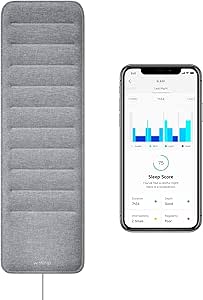
Withings Sleep – Sleep Tracking Pad Under the Mattress
As an affiliate, we earn on qualifying purchases.
Why Hormone Therapy Use Changed
Menopausal hormone therapy has long been recognized as effective for vasomotor symptoms, but use declined after findings from the Women’s Health Initiative (WHI) raised concerns about cardiovascular disease and breast cancer. Those findings led to boxed warnings, according to the report. The FDA recently removed warnings about cardiovascular disease and breast cancer, and reanalyses of WHI data have since suggested more favorable outcomes for women closer to menopause.
In 2022, the Menopause Society said the risk-benefit balance is favorable for treating vasomotor symptoms in women under 60 and within 10 years of menopause onset who have no contraindications. That position statement is separate from the new ACP guideline. In an accompanying editorial in the Annals of Internal Medicine, Mayo Clinic physicians Stephanie Faubion and Regina Castaneda said lower use reflects concerns and misconceptions among patients and clinicians, barriers to care and undertreatment of symptoms.
The review covered trials conducted from 1980 through 2024, mostly in North America and Europe. Only eight studies focused on perimenopausal women, and compounded estrogens were not evaluated. Older trials more often studied higher-dose estrogen, while newer ones more often assessed nonhormonal treatments.
““Our results are consistent with previous systematic reviews reporting that estrogens, with and without progestogens, are highly effective for VMS.””
— Susan Diem, MD, MPH, and colleagues
Evidence Gaps for Higher-Risk Patients
The trials do not establish how well the recommendations apply to many patients who were excluded. Common exclusions included people with a history of breast cancer, endometrial hyperplasia or cancer, cardiovascular disease, stroke or venous thromboembolism. The review authors and editorialists called for more evidence in populations who cannot use hormone therapy and need guidance tailored to their clinical circumstances.
Researchers also found insufficient evidence to determine whether treatment results vary by age, race, ethnicity or menopausal status. With only eight studies of perimenopausal women and no evaluation of compounded estrogens, the review leaves those areas unresolved. The supplied report does not provide additional detail about the guideline’s full discussion of these evidence gaps.
The review also found that hormone therapy’s efficacy did not vary by route of administration, while symptom effects were more pronounced at higher estrogen doses. That finding does not by itself identify an appropriate dose for an individual patient. The recommendations and trial findings describe evidence across studies, not a personal treatment plan.
Further Research and Clinical Discussions
The next steps described in the guideline and accompanying commentary are more research in populations underrepresented in trials and conversations between clinicians and patients about menopause and treatment choices. The editorialists said the guideline’s call for education and proactive discussion reinforces the role of those conversations in menopause care.
The review authors also said more research is needed on oxybutynin. Although the medicine reduced symptom frequency and severity and improved sleep quality in the evidence they assessed, those findings came from a small trial and were supported by low- to moderate-certainty evidence. ACP said further study is needed to assess its benefits and harms.
The source report does not give a timetable for additional studies or identify a planned date for a guideline update. For now, ACP’s published recommendations provide a treatment sequence, while several questions about patients not represented in the trial evidence remain open.
Key Questions
What does ACP recommend first for menopausal hot flashes and night sweats?
ACP recommends menopausal hormone therapy as the first-line pharmacologic treatment. It recommends estrogen with progestogen for patients who have a uterus and estrogen alone for those who do not.
Which medicines does the guideline list if hormone therapy is unsuitable?
ACP lists desvenlafaxine or venlafaxine, both SNRIs, as second-line options for patients with a contraindication to hormone therapy or who do not tolerate it.
What are the guideline’s third-line options?
Third-line options include the SSRIs escitalopram and paroxetine, gabapentin, and the neurokinin receptor antagonists fezolinetant and elinzanetant. The evidence certainty varies by medicine.
How broad was the evidence review?
The review included 90 trials in 102 publications, with studies lasting at least eight weeks. Many participants were healthy, white, postmenopausal women aged 49 to 57, so the results may not answer questions for patients excluded from trials.
What remains uncertain about the recommendations?
The review found insufficient evidence on how results vary by age, race, ethnicity or menopausal status. More research is also needed for people with health conditions that commonly excluded them from the trials, including prior cancer or cardiovascular disease.
Source: rss