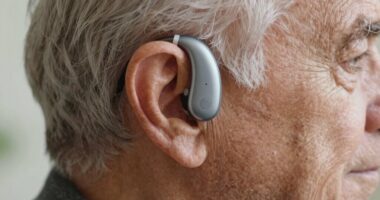

TL;DR

Get health and wellness essentials delivered free — and shop member deals
- Fast, free delivery on millions of items
- Access to Prime Big Deal Days deals on October 6–7
- Prime Video, Amazon Music and more included
In the CHOICE trial, hearing aids did not significantly reduce the 24-month rate of progression from mild cognitive impairment to dementia. A secondary outcome found cognitive improvement in 15.34% of participants assigned hearing aids, compared with 2.36% receiving hearing care education; researchers say this signal needs confirmation.
The CHOICE trial found that hearing aids did not significantly reduce progression to dementia among older adults with mild cognitive impairment and hearing loss, but more participants assigned the devices showed cognitive improvement on a secondary measure. The improvement finding is exploratory, and the researchers say the trial’s low dementia-conversion rate limited its ability to answer the primary question.
Among 353 participants assigned to a hearing aid intervention, 3.09% progressed from mild cognitive impairment to dementia-level impairment over 24 months, based on Clinical Dementia Rating scores. The rate was 4.74% among 350 participants assigned to hearing care education. The difference was not statistically significant: the reported relative risk was 0.59, with P=0.23.
A prespecified secondary outcome measured movement from a CDR global score of 0.5, indicating mild cognitive impairment, to 0, indicating normal cognition on that scale. Improvement occurred in 15.34% of the hearing aid group and 2.36% of the education group. The researchers reported a relative risk of 5.94 and P<0.001. That result describes this trial’s measured outcome; it does not establish that hearing aids reverse cognitive impairment generally.
The study enrolled 703 people with moderate-to-severe hearing loss and mild cognitive impairment. Participants had a mean age of 74.5, and 64% were men. The trial took place from 2021 to 2026 at outpatient clinics and community health stations in Shanghai. Hao Wu, MD, PhD, of Shanghai Jiao Tong University School of Medicine, and co-authors reported the findings in JAMA Neurology.
A Possible Benefit for Higher-Risk Adults
The secondary result raises the possibility that hearing intervention could be associated with measurable cognitive improvement among some older adults already experiencing mild cognitive impairment. That matters because hearing loss is considered a modifiable dementia risk factor, and CHOICE studied a group at elevated risk of cognitive decline. The result may inform future research and conversations about hearing care, but the trial does not establish a dementia-prevention effect.
Hearing aids also have established benefits for communication, social engagement and quality of life, according to Wu. Those benefits do not depend on whether the cognitive signal is confirmed. For the specific question of dementia progression, however, CHOICE’s primary result remains inconclusive: the observed conversion rates were lower than the researchers expected, leaving the study underpowered to detect a possible difference.
Top picks for "unexpect cognitive improvement"
As an affiliate, we earn on qualifying purchases.
How CHOICE Fits Earlier Research
CHOICE follows the 2023 ACHIEVE trial, which evaluated a hearing intervention among older adults without cognitive impairment. ACHIEVE found no overall treatment effect on cognitive decline after three years. An analysis of a subgroup at higher risk of decline found a significant 48% relative reduction in cognitive change among people who received the intervention, as described by Justin Golub, MD, MS, of Columbia University Irving Medical Center, and co-authors in an editorial.
The editorialists connected that higher-risk subgroup result with CHOICE, where all participants had mild cognitive impairment when randomized. They also cautioned that CHOICE’s large secondary-outcome effect needs replication, particularly alongside its null primary result. The studies address different populations and outcomes, so their findings do not by themselves settle whether hearing intervention changes dementia risk.
“The primary outcome was underpowered. Therefore, the null primary result should be read as “not proven,” rather than “no benefit.””
— Hao Wu, MD, PhD, and co-authors
Limits of the Cognitive Signal
It is not clear whether the higher rate of measured improvement will be reproduced in another trial or translate into lasting changes in everyday function. The secondary outcome was a change on the CDR scale, and the study relied on that subjective scale for both screening and outcomes, which the authors said may have introduced evaluation bias.
The authors also noted that the eligibility criterion of a CDR score of 0.5 was not specified in the protocol or trial registration, creating potential selection bias. The low 24-month conversion rate weakened conclusions about the primary outcome. The reported results do not establish how hearing aids might affect dementia incidence over longer periods or in other populations.
Replication Is the Next Test
The researchers say the cognitive-improvement finding needs confirmation in further research. A replicated study would help establish whether the difference persists and clarify which patients might experience it. Until then, CHOICE offers a secondary-outcome signal alongside an inconclusive primary result, rather than proof that hearing aids prevent dementia or reverse cognitive impairment.
For older adults with hearing loss, Wu said hearing aids have communication, social-engagement and quality-of-life benefits regardless of any cognitive effect. Whether those benefits extend to a reliable improvement in cognition for people with mild cognitive impairment remains an open research question.
Key Questions
Did hearing aids prevent progression to dementia in the CHOICE trial?
The trial did not find a statistically significant reduction in progression over 24 months. Dementia-level impairment occurred in 3.09% of the hearing aid group and 4.74% of the education group; the reported P value was 0.23.
What cognitive improvement did the researchers report?
On a secondary outcome, 15.34% of participants assigned hearing aids moved from a CDR global score of 0.5 to 0, compared with 2.36% assigned hearing care education. The finding needs replication.
Who took part in the trial?
The study included 703 older adults in Shanghai with moderate-to-severe hearing loss and mild cognitive impairment. Their mean age was 74.5 years.
Does the result show hearing aids reverse cognitive impairment?
No. The trial reported more participants reaching a normal CDR score on a secondary measure, but that result is exploratory and does not establish that hearing aids reverse cognitive impairment generally.
Source: rss
Fall Picks
fall essentials
As an affiliate, we earn on qualifying purchases.