
TL;DR

Get health and wellness essentials delivered free with Prime
- Fast, free delivery on millions of items
- Prime Video, Amazon Music and more included
- Member-only deals all year
A Sixty and Me report says many people return to activities such as walking, swimming, cycling and golf after hip or knee replacement, but recovery and timing vary. It advises gradually increasing activity, continuing strengthening exercises and discussing higher-impact sports with a surgeon because their effect on implant life is uncertain.
A Sixty and Me report outlines how people may return to activity after hip or knee replacement, from assisted walking soon after surgery to lower-impact exercise as recovery progresses. It says timing differs between patients and recommends discussing sport-specific plans with a surgeon, particularly for higher-impact activities whose effect on implant life is not settled.
The report says many patients stand and take assisted steps on the day of surgery, initially using a walker or cane. These aids help guard against falls while strength and balance return; the surgeon or physical therapist advises when they can be set aside. Walking is described as a central part of early recovery, with distance or duration increased gradually.
For knee replacement, the report says much of the ability to bend and straighten the knee returns within about six weeks, and recommends doing prescribed exercises daily during that period, even if the knee feels stiff. Swimming can generally start after the surgeon confirms the incision has healed. Many other activities may resume at around three months, but only after the patient receives clearance from the surgeon. Recovery can move at different speeds from week to week.
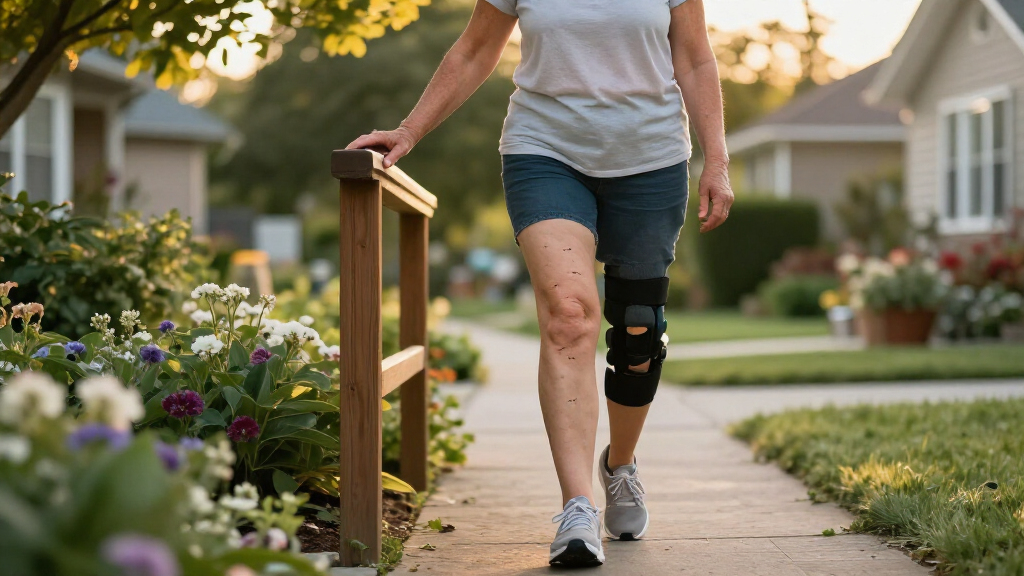
After recovery, activities identified as lower impact include walking, hiking, swimming, cycling, golf and doubles tennis. Kneeling is not thought to damage a knee replacement, according to the report, though it may be uncomfortable at first; starting on a cushion or folded towel may help. Running, singles tennis and pickleball are higher-impact examples for which the report says surgeons do not have a definitive answer on whether participation shortens implant life.
Building Activity Into Recovery
Returning to movement matters because joint pain can limit everyday activities and recreation before surgery. The report presents activity not as a single finish line but as a process: walking and prescribed exercises support early recovery, while continued strengthening may help people maintain function after formal physical therapy ends.
Its practical message is to increase activity in small steps and monitor the joint afterward. If new swelling or pain appears the next morning, the report advises easing back before building activity again. It also notes that short sessions count and suggests aiming to be active on most days, rather than treating exercise as an all-or-nothing task. These are general points from the report, not an individualized rehabilitation plan.
The distinction between lower- and higher-impact sports is relevant for people deciding what to resume. Because the report says evidence or professional consensus does not settle whether high-impact activity shortens implant life, patients should not treat its examples as personal clearance. A surgeon can advise based on the specific sport and the person’s recovery.
Products Worth Considering

BowFlex Results Series SelectTech Adjustable Dumbbells (Pair)

Therabody SleepMask Blackout Eye Mask with Vibration

Oral-B iO Series 9 Limited Rechargeable Electric Toothbrush with 7 Cleaning Modes
As an affiliate, we earn on qualifying purchases.
Early Milestones and Longer Recovery
The report frames activity after replacement around two periods: the first few months, when walking aids and prescribed exercises may be part of recovery, and the longer term, when people continue building strength. It says muscles around a new hip or knee may keep gaining strength for a year or more after surgery, including after formal therapy sessions end.
It also cautions that recovery does not necessarily progress evenly. The approximate six-week and three-month milestones are descriptions in the report, not guarantees for every patient. The surgeon and physical therapist remain the sources for decisions about an individual’s walking aid, exercise routine, wound healing and return to a particular activity.
The report adds that the opposite hip or knee and the lower back may carry more load before surgery and during recovery. It advises raising new aches in those areas with a surgeon or physical therapist, rather than focusing only on the replaced joint.
““Most other activities return at around three months, after clearance from the surgeon.””
— Sixty and Me report
Sport-Specific Risks Remain Unsettled
The report does not give a single timetable that applies to everyone, and it does not identify clinical studies or professional guidelines supporting its activity recommendations. Recovery time and readiness depend on the individual, so the approximate milestones should not be read as a substitute for advice from the treating team.
It also leaves unresolved whether running, singles tennis or pickleball may shorten the life of an implant. The report says surgeons debate the issue and offers no definitive answer. It does not quantify implant risk or compare outcomes across sports. Patients considering these activities should ask their surgeon about their own joint, recovery and plans.
Follow the Care Team’s Guidance
For readers recovering from surgery, the next steps described in the report are to follow the prescribed exercise plan, increase walking gradually and use a walker or cane until the care team advises otherwise. Swimming and other activities should wait for the relevant clearance, including confirmation that the incision has healed before swimming.
As activity increases, patients can monitor how the joint feels the next day and temporarily reduce effort if new swelling or pain develops. They should also report new discomfort in the opposite joint or lower back to their surgeon or physical therapist. Anyone hoping to resume a higher-impact sport should discuss that specific activity with the surgeon before returning to it.
Key Questions
When can someone return to activities after hip or knee replacement?
The report says many other activities may resume at around three months, after the surgeon gives clearance. Timing varies, and this is not a guarantee for every patient.
Which activities does the report describe as lower impact?
It lists walking, hiking, swimming, cycling, golf and doubles tennis. Patients should still follow their own recovery plan and medical advice.
Is kneeling harmful after a knee replacement?
The report says kneeling is not thought to damage a knee replacement, though it can be uncomfortable initially. It suggests trying a soft surface, such as a cushion or folded towel.
Can people run or play singles tennis after replacement?
The report says these higher-impact activities remain debated and that there is no definitive answer on whether they shorten implant life. It recommends discussing the specific sport with a surgeon.
What should someone do if pain or swelling increases after activity?
The report advises easing back for a while if new swelling or pain is present the next morning. Patients should contact their surgeon or physical therapist for guidance about symptoms or changes in their recovery.
Source: sixtyandme.com