
The best portable AED defibrillators balance clear emergency instructions, practical storage, and readiness for the people who may need to use them. My best overall pick is the Philips HeartStart OnSite AED with Standard Carry Case, which pairs a familiar device with a straightforward carry setup. The HeartStart Ready-Pack stands out for buyers who want supplies arranged for quick access, while the HeartStart Home AED with Training Pads Cartridge is a better fit for households that value practice. The main tradeoffs are package contents, storage convenience, and whether a model is intended for home or shared public use—not simply the device name. Read on for how I distinguish the ten options and which buyer each package suits.

Get health and wellness essentials delivered free with Prime
- Fast, free delivery on millions of items
- Prime Video, Amazon Music and more included
- Member-only deals all year
Key Takeaways
- The OnSite models dominate this lineup, so the practical differences often come down to case style and package contents rather than a different core device.
- The Standard Carry Case is my best overall fit for buyers who want a familiar OnSite setup without prioritizing a slim profile or bundled extras.
- Ready-Pack packaging favors organized access; compare its contents with a separate case package before choosing based on the word “ready” alone.
- The Home AED’s training-pads cartridge serves a distinct purpose: it supports practice, while the OnSite packages focus on having an emergency-ready device and carrying setup.
- The two generic portable AED listings need extra scrutiny because the supplied names reveal less about brand support, replacement parts, and service than the Philips listings.
| Philips HeartStart OnSite AED Defibrillator Business Package |  | Best for a Ready-to-Equip Workplace | Model: M5066A-R01BPB | Manufacturer: Philips | Weight: 6.1 pounds | VIEW LATEST PRICE | See Our Full Breakdown |
| Philips HeartStart OnSite AED Defibrillator with Standard Carry Case | 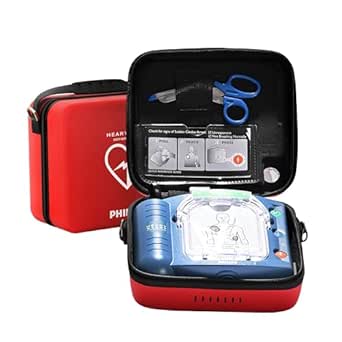 | Best for Portable Simplicity | Model: M5066A-C01 | Package dimensions: 10.5 x 9.5 x 5.75 inches | Item weight: 5.6 pounds | VIEW LATEST PRICE | See Our Full Breakdown |
| Philips HeartStart OnSite AED Defibrillator Value Package | 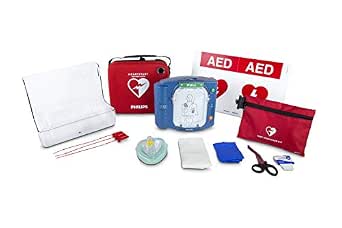 | Best for Wall-Mounted Readiness | Model: M5066A-C02VPB | Product dimensions: 20.75 x 15 x 10 inches | Item weight: 8.9 pounds | VIEW LATEST PRICE | See Our Full Breakdown |
| Portable Automatic External Defibrillator (AED) for Home and Public Emergency Use |  | Best for Buyers Prioritizing Multi-Setting Use | Device type: Automatic external defibrillator (AED) | Portability: Portable | Intended settings: Home and public environments, including restaurants, offices, gyms, and airports | VIEW LATEST PRICE | See Our Full Breakdown |
| Philips HeartStart OnSite AED Defibrillator Business Package | | Best for a Complete Workplace Station | Model: M5066A-C02BPB | Manufacturer: Philips Healthcare | Dimensions: 20.75 x 15.62 x 21.5 inches | VIEW LATEST PRICE | See Our Full Breakdown |
| Philips HeartStart Ready Pack AED Defibrillator Value Package |  | Best for a Ready-to-Install Setup | Model: M5066A-R01VPB | Manufacturer: Philips | Dimensions: 20 x 15 x 10 inches | VIEW LATEST PRICE | See Our Full Breakdown |
| Philips HeartStart Home AED Defibrillator with Training Pads Cartridge, M5068A-C02 |  | Best for Home Preparedness and Practice | Model: M5068A-C02 | Device type: Home AED defibrillator | Intended setting: Homes and private residences | VIEW LATEST PRICE | See Our Full Breakdown |
| Philips HeartStart OnSite AED Defibrillator with Slim Carry Case | 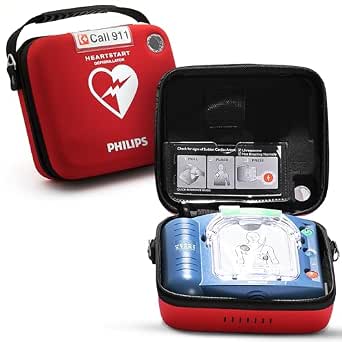 | Best Compact Philips Pick | Manufacturer: Philips Healthcare | Model: M5066A-CO2 | Weight: 5.4 pounds | VIEW LATEST PRICE | See Our Full Breakdown |
| Philips HeartStart OnSite AED Defibrillator Ready-Pack |  | Best for Spare-Pads Readiness | Model: M5066A-R01 | Manufacturer: Philips Healthcare | Weight: 6.1 pounds | VIEW LATEST PRICE | See Our Full Breakdown |
| Portable Automatic External Defibrillator (AED) for Home, Gym, Office, and School |  | Best for Broad Setting Flexibility | Device type: Automatic external defibrillator (AED) | Intended environments: Home, gym, office, school, commercial, and public settings | Status indicators: Visual indicators for device status and readiness | VIEW LATEST PRICE | See Our Full Breakdown |
| portable AED defibrillator | Model | Battery | AED warranty | Manufacturer |
|---|---|---|---|---|
| Philips HeartStart OnSite AED | M5066A-R01BPB | 1 CR123A battery, included | 8 years | Philips |
| Philips HeartStart OnSite AED | M5066A-C01 | 1 CR123A battery, included | 8 years | — |
| Philips HeartStart OnSite AED | M5066A-C02VPB | 1 CR123A battery, included | 8 years | — |
| Portable Automatic External De | — | — | — | — |
| Philips HeartStart OnSite AED | M5066A-C02BPB | 1 CR123A battery, included | 8 years | Philips Healthcare |
| Philips HeartStart Ready Pack | M5066A-R01VPB | 1 CR123A battery, included | — | Philips |
| Philips HeartStart Home AED De | M5068A-C02 | — | 8 years | — |
| Philips HeartStart OnSite AED | M5066A-CO2 | 1 CR123A battery, included | — | Philips Healthcare |
| Philips HeartStart OnSite AED | M5066A-R01 | 1 CR123A battery, included | 8 years | Philips Healthcare |
| Portable Automatic External De | — | — | — | — |
More Details on Our Top Picks
Philips HeartStart OnSite AED Defibrillator Business Package
I’d choose this business package when a workplace needs more than the AED alone: it combines the HeartStart OnSite with a spare Adult SMART Pads Cartridge, carry case, response kit, basic cabinet, and wall sign. Step-by-step voice prompts and CPR guidance can help a responder follow instructions during an emergency, while automatic self-tests check the device routinely. Compared with the standard-case Philips HeartStart OnSite, this package adds mounting and response supplies, but that broader setup comes with a real portability cost: its listed dimensions make it substantially bulkier to store or move. It also includes a trainer-conversion option only with separately purchased training pads. I’d favor it for a fixed workplace location over buyers who want the lightest grab-and-go kit.
Pros:- Includes a spare Adult SMART Pads Cartridge
- Voice prompts and CPR guidance support step-by-step response
- Automatic self-tests run daily, weekly, and monthly
- Includes a basic cabinet, wall sign, carry case, and Fast Response Kit
Cons:- The package is bulky, with listed dimensions of 20.75 x 15.63 x 21.5 inches
- Training pads for trainer use are sold separately
Best for: Workplaces that want an AED, spare adult pads, response supplies, and basic wall storage in one package.
Not ideal for: Individuals or small teams who need a compact kit for frequent transport or have little room for the cabinet and accessories.
- Model:M5066A-R01BPB
- Manufacturer:Philips
- Weight:6.1 pounds
- Dimensions:20.75 x 15.63 x 21.5 inches
- Battery:1 CR123A battery, included
- AED warranty:8 years
- Battery warranty:4 years
- Features:Voice prompts, CPR guidance, SMART Analysis, Quick Shock, automatic self-tests
- Package contents:AED, carry case, spare Adult SMART Pads Cartridge, battery, Fast Response Kit, basic cabinet, wall sign, setup and reference guides, maintenance booklet, owner’s manual
Our verdict“Choose this package for a workplace that values spare pads and wall-ready supplies more than a compact footprint.”
Philips HeartStart OnSite AED Defibrillator with Standard Carry Case
This is the most straightforward choice in this group for buyers who want the HeartStart OnSite in a transportable case without a cabinet or wall-mount extras. It arrives with its battery and Adult SMART Pads cartridge installed, and its case has room for a spare battery and cartridge. Voice prompts and CPR guidance make the device less dependent on a responder remembering a sequence, while Quick Shock is specified to deliver a shock within 8 seconds. Compared with the OnSite Value Package, this version is lighter and has a much smaller listed package footprint, but it does not include that package’s wall mount, sign, or Fast Response Kit. Training pads are also separate, so I’d pick it for portability rather than for a complete workplace station.
Pros:- Pre-installed battery and Adult SMART Pads Cartridge
- Carry case has room for a spare battery and pads cartridge
- Voice prompts and CPR guidance provide step-by-step support
- Quick Shock feature can deliver a shock within 8 seconds
Cons:- Training pads for trainer use are sold separately
- Does not include the wall-mount and response accessories found in the Value Package
Best for: Small offices, community groups, and mobile teams seeking a carry-case AED with its adult pads and battery ready.
Not ideal for: Organizations setting up a fixed response station that want a wall mount, wall sign, or Fast Response Kit included.
- Model:M5066A-C01
- Package dimensions:10.5 x 9.5 x 5.75 inches
- Item weight:5.6 pounds
- Battery:1 CR123A battery, included
- Included accessories:Standard carry case, pre-installed battery, pre-installed SMART Pads Cartridge, quick setup guide, maintenance booklet, quick reference guide, owner’s manual
- AED warranty:8 years
- Battery warranty:4 years
- Pads warranty:Until expiration date
- Quick Shock:Can deliver a shock within 8 seconds
Our verdict“Choose this model for a portable, ready-to-carry AED setup without the extra bulk of workplace mounting accessories.”
Philips HeartStart OnSite AED Defibrillator Value Package
The OnSite Value Package bridges the gap between a carry-case AED and a more fully stocked business kit: it includes a wall mount, sign, Fast Response Kit, carry case, battery, and adult pads. That makes it a practical fit for a shared location where the device needs a known home but may still need to be carried to an incident. Like the standard-case HeartStart OnSite, it offers voice guidance, CPR instructions, and recurring self-tests; unlike that more transport-focused option, it brings mounting supplies in the box. The tradeoff is a listed weight of 8.9 pounds and no spare pads cartridge. Its training conversion requires separately purchased pads, and the supplied replacement-parts warranty restriction may matter to organizations planning servicing.
Pros:- Includes a wall mount and wall sign for a defined storage location
- Fast Response Kit and carry case are included
- Voice prompts, CPR guidance, and regular self-tests support response readiness
- Designed for use on wet and metal surfaces
Cons:- No spare pads cartridge is listed in the package contents
- Training pads for trainer conversion are sold separately
- Replacement parts are permitted for warranty purposes only
Best for: Small businesses, clubs, and shared facilities that want a wall-mounted AED with response supplies and a carry case.
Not ideal for: Buyers who need a spare pads cartridge included, a lighter carry setup, or flexible replacement-part servicing.
- Model:M5066A-C02VPB
- Product dimensions:20.75 x 15 x 10 inches
- Item weight:8.9 pounds
- Battery:1 CR123A battery, included
- Included pads:1 pre-installed Adult SMART Pads Cartridge
- AED warranty:8 years
- Battery warranty:4 years
- Pads warranty:Until expiration date
- Other accessories warranty:1 year
Our verdict“Pick this package for a shared site that wants wall storage and emergency accessories without the larger business-package bundle.”
Portable Automatic External Defibrillator (AED) for Home and Public Emergency Use
This AED is described for use across homes and public settings such as restaurants, offices, gyms, and airports, which gives it a broad intended-use profile. The available product information, however, is much thinner than for the Philips HeartStart OnSite models: it does not specify voice prompts, CPR guidance, included pads, battery details, warranty, or self-test routines. That makes it harder for me to compare readiness and ongoing upkeep from the supplied details alone. Its care instructions are clear—wipe with a damp lint-free cloth, keep liquids away, and inspect for wear—but those precautions do not substitute for missing operating specifications. I’d only shortlist it after confirming its clinical, regulatory, battery, pad, and maintenance details with the seller or manufacturer.
Pros:- Described for home and public emergency settings
- Portable design is intended for use across multiple environments
- Cleaning guidance specifies a damp lint-free cloth
- Provides instructions to inspect for wear before use
Cons:- The supplied product details do not state voice prompts or CPR guidance
- Battery, pads, warranty, and self-test information are not provided
- Must not be submerged or used after liquid exposure or if damaged
Best for: Buyers considering an AED for a home or public venue who can verify the device’s full operating and maintenance specifications before purchase.
Not ideal for: Organizations that need documented prompts, pad and battery details, self-test schedules, or warranty information to make a confident selection.
- Device type:Automatic external defibrillator (AED)
- Portability:Portable
- Intended settings:Home and public environments, including restaurants, offices, gyms, and airports
- Cleaning:Gently wipe with a damp lint-free cloth; do not soak
- Liquid exposure:Do not submerge or spill liquids on the unit; do not operate if exposed to fluid
- Inspection:Check for signs of abuse or wear before each use
Our verdict“Consider it only if its missing operating, maintenance, and compliance details can be confirmed before buying.”
Philips HeartStart OnSite AED Defibrillator Business Package
This HeartStart OnSite Business Package is aimed at workplaces that want the AED accompanied by visible storage and response accessories: the listed bundle includes a basic cabinet, wall sign, carry case, and Fast Response Kit, along with the installed battery and SMART Pads. Its SMART Analysis and Quick Shock feature add clear response functions, while recurring self-tests reduce reliance on manual checks. Compared with the other Philips business package in this batch, this listing specifies pre-installed adult pads but does not list a spare cartridge, so it is less suited to buyers seeking backup pads in the box. The listed 21-pound combined weight also makes it a poor choice for frequent transport. Training pads are sold separately, and the weight and dimensions warrant checking the intended storage location.
Pros:- Includes a basic cabinet, wall sign, carry case, and Fast Response Kit
- Pre-installed battery and SMART Pads are listed
- SMART Analysis and Quick Shock are specified features
- Daily, weekly, and monthly self-tests support routine readiness checks
Cons:- The device and accessories are listed at a combined weight of 21 pounds
- Training pads for trainer conversion are sold separately
- A spare Adult SMART Pads Cartridge is not listed among the included accessories
Best for: Businesses that want a fixed AED station with a cabinet, wall sign, carry case, and Fast Response Kit included.
Not ideal for: Mobile teams or buyers who want a lightweight kit, a spare pads cartridge, or trainer pads included.
- Model:M5066A-C02BPB
- Manufacturer:Philips Healthcare
- Dimensions:20.75 x 15.62 x 21.5 inches
- Weight:21 pounds
- Battery:1 CR123A battery, included
- AED warranty:8 years
- Battery warranty:4 years
- Pads warranty:Until expiration date
- Features:Daily, weekly, and monthly self-tests; SMART Analysis; Quick Shock; step-by-step voice prompts
Our verdict“Choose this package for a fixed workplace station where included storage and response accessories matter more than portability.”
Philips HeartStart Ready Pack AED Defibrillator Value Package
I’d choose this Ready Pack when I want an AED package that arrives with more of the basics for placing and maintaining it. Along with the device, battery, and pre-installed adult pads, it includes a spare pads cartridge, fast response kit, wall mount, and wall sign. Those extras make it easier to set up a visible, fixed location than the slimmer Philips HeartStart OnSite AED with Slim Carry Case, which comes with fewer listed accessories. Voice prompts and CPR guidance are designed to coach a responder through use, while daily, weekly, and monthly self-tests monitor readiness. The stated Quick Shock delivery within 8 seconds is another useful preparedness detail. The tradeoff is a listed size of 20 x 15 x 10 inches, which may be awkward in a small cabinet, and a training-pads cartridge is sold separately.
Pros:- Includes a spare Adult SMART Pads cartridge, battery, carry case, wall mount, and wall sign.
- Step-by-step voice prompts and CPR guidance support responders with limited AED familiarity.
- Daily, weekly, and monthly self-tests monitor device readiness.
- Quick Shock is listed as delivering a shock within 8 seconds.
Cons:- The listed dimensions, 20 x 15 x 10 inches, may make storage less convenient than the slim-carry-case OnSite model.
- A training-pads cartridge for trainer use is sold separately.
Best for: Small businesses, community venues, and households that want wall-mounting accessories and a spare adult pads cartridge included.
Not ideal for: Buyers short on storage space or anyone seeking a package that already includes a training-pads cartridge.
- Model:M5066A-R01VPB
- Manufacturer:Philips
- Dimensions:20 x 15 x 10 inches
- Weight:6.1 pounds
- Battery:1 CR123A battery, included
- Pads:Pre-installed Adult SMART Pads cartridge and spare cartridge
- Self-tests:Daily, weekly, and monthly
- Warranty:8 years for AED; 4 years for battery; pads covered until expiration date
Our verdict“Choose this package for its spare pads and mounting accessories, but check the listed dimensions before assigning it a storage spot.”
Philips HeartStart Home AED Defibrillator with Training Pads Cartridge, M5068A-C02
This home-focused package stands apart because it includes a training pads cartridge as well as the AED’s pre-installed SMART Pads, battery, and slim carry case. That gives households a way to practice setup and pad placement, a useful distinction from the Philips HeartStart OnSite AED with Slim Carry Case, whose listed package does not include training pads. Voice prompts and CPR instructions are intended to guide a responder at their own pace, and the device runs daily, weekly, and monthly self-tests. I’d favor it for a household that values practice materials over wall-mounting accessories: the Philips HeartStart Ready Pack Value Package includes a wall mount and spare pads, but not the training cartridge. The limitation is its home-oriented bundle and the fact that an additional cartridge for trainer conversion is sold separately.
Pros:- Includes a training pads cartridge alongside pre-installed SMART Pads.
- Voice prompts and CPR instructions are designed to guide users without AED experience.
- Slim carry case and pre-installed battery simplify keeping the device together for home storage.
- Daily, weekly, and monthly self-tests run without manual calibration.
Cons:- An additional Adult or Infant/Child Training Pads Cartridge for trainer conversion is sold separately.
- The package is positioned for homes and private residences rather than as a mounting-focused workplace kit.
Best for: Households that want an AED with included training pads and learning materials for familiarizing family members with the device.
Not ideal for: Workplaces seeking a wall-mount-focused package or buyers who need a training cartridge for every intended practice configuration.
- Model:M5068A-C02
- Device type:Home AED defibrillator
- Intended setting:Homes and private residences
- Guidance:Step-by-step voice prompts and CPR instructions
- Self-tests:Daily, weekly, and monthly
- Included items:Pre-installed battery, SMART Pads cartridge, slim carry case, training pads, guides, manual, and training DVD
- AED warranty:8 years
- Battery warranty:4 years
Our verdict“Pick this home package if practice materials matter more than the wall-mount and spare-pads extras in the Ready Pack Value Package.”
Philips HeartStart OnSite AED Defibrillator with Slim Carry Case
For buyers who want to keep an AED portable without choosing a larger accessory bundle, this OnSite package is the most straightforward fit in this group. It weighs 5.4 pounds and comes with a slim carry case, battery, and pre-installed Adult SMART Pads. Its package dimensions are also provided, making it easier to plan storage than with the Ready Pack Value Package, whose listed dimensions are substantially larger. The voice prompts adapt to the user’s pace and provide CPR guidance, so the focus is on a compact, ready-to-carry device rather than on extra setup gear. The tradeoff is a leaner package: unlike the Philips HeartStart OnSite AED Ready-Pack, it does not list spare pads. Training pads for trainer use are sold separately, too, so it is less suited to buyers who want practice supplies included.
Pros:- At 5.4 pounds, it is lighter than the listed 6.1-pound Ready-Pack models in this group.
- Slim carry case supports portable storage and transport.
- Pre-installed Adult SMART Pads and an included battery provide the core listed components.
- Voice prompts adapt to the user’s pace and provide CPR guidance.
Cons:- Spare pads are not listed as included, unlike the OnSite Ready-Pack.
- Training pads for trainer use are sold separately.
Best for: Schools, gyms, and small workplaces that want a lighter Philips AED with a slim case and core operating components.
Not ideal for: Organizations that want spare pads, a wall-mount kit, or training pads included with their AED package.
- Manufacturer:Philips Healthcare
- Model:M5066A-CO2
- Weight:5.4 pounds
- Package dimensions:12.44 x 11.02 x 7.52 inches
- Battery:1 CR123A battery, included
- Pads:Pre-installed Adult SMART Pads cartridge
- Included components:AED, battery, Adult SMART Pads cartridge, and setup materials
- Carry case:Slim carry case
Our verdict“Choose this model when a lighter, slimmer carry setup matters more than spare pads or bundled training accessories.”
Philips HeartStart OnSite AED Defibrillator Ready-Pack
The OnSite Ready-Pack makes more sense than the slim-case OnSite when a buyer wants a spare adult pads cartridge already on hand. It includes the carry case, pre-installed pads, spare pads, and battery, while retaining the same family of voice prompts and CPR guidance. Automatic daily, weekly, and monthly self-tests provide recurring readiness checks, and the listed shock delivery time is within 8 seconds. At 6.1 pounds, it is heavier than the 5.4-pound Philips HeartStart OnSite with Slim Carry Case, so I’d choose that lighter package for frequent carrying. This Ready-Pack instead favors preparedness supplies over lower weight. It is also less fully outfitted for fixed installation than the Philips HeartStart Ready Pack Value Package, which adds a wall mount and sign. Training pads remain a separate purchase.
Pros:- Includes a carry case, pre-installed Adult SMART Pads, spare pads, and battery.
- Automatic self-tests run daily, weekly, and monthly.
- Listed shock delivery is within 8 seconds.
- Designed for use on wet and metal surfaces.
Cons:- At 6.1 pounds, it is heavier than the 5.4-pound OnSite model with Slim Carry Case.
- Training pads cartridge is sold separately.
- Does not list the wall mount and wall sign included with the Ready Pack Value Package.
Best for: Workplaces and community groups that want spare adult pads stored with the AED and can accept a 6.1-pound package.
Not ideal for: People who carry an AED often and prioritize lower weight, or organizations that need wall-mount accessories included.
- Model:M5066A-R01
- Manufacturer:Philips Healthcare
- Weight:6.1 pounds
- Package dimensions:10.5 x 9.5 x 5.75 inches
- Battery:1 CR123A battery, included
- Pads:Pre-installed Adult SMART Pads cartridge and spare pads
- AED warranty:8 years
- Shock delivery:Within 8 seconds
Our verdict“Choose this Ready-Pack when having spare adult pads bundled matters more than the lighter weight or wall-mount extras offered by other Philips packages.”
Portable Automatic External Defibrillator (AED) for Home, Gym, Office, and School
This AED is described for homes, gyms, offices, schools, commercial sites, and public settings, making its stated scope broader than the home-specific Philips HeartStart Home AED. Its visual status indicators give an at-a-glance readiness cue, which may suit a shared location where staff need to check the device during routine inspections. The tradeoff is that the supplied details are much less specific than those for the Philips HeartStart OnSite Ready-Pack: no weight, battery type, pads configuration, voice guidance, self-test schedule, or warranty is provided. That makes it harder to compare portability and ongoing readiness from the product data alone. The manufacturer also calls for regular inspection and dry, well-ventilated storage away from heat, humidity, and direct sunlight. I’d shortlist it only when those missing details can be confirmed.
Pros:- Intended for residential, workplace, commercial, and public settings.
- Visual status indicators show device status and readiness.
- Portable design is stated in the product information.
- Storage and maintenance guidance is provided.
Cons:- The supplied information does not specify weight, dimensions, or battery type, limiting portability comparisons.
- Pads, user guidance, and self-test details are not specified in the supplied product data.
- Requires regular inspection and storage away from heat, humidity, and direct sunlight.
Best for: Facility managers considering one AED for a mixed-use site who can verify the missing operating, battery, and pad details before purchase.
Not ideal for: First-time home buyers or organizations that need clearly specified voice prompts, pads, self-tests, and battery information in the listing.
- Device type:Automatic external defibrillator (AED)
- Intended environments:Home, gym, office, school, commercial, and public settings
- Status indicators:Visual indicators for device status and readiness
- Design:Portable
- Storage guidance:Store in a dry, well-ventilated environment away from high temperatures, high humidity, and direct sunlight
- Maintenance guidance:Regular inspections and basic maintenance according to the instruction manual
Our verdict“Consider it for a multi-use facility only after confirming its pads, battery, guidance, and self-test details, which are specified more clearly for the Philips OnSite Ready-Pack.”
How We Picked
I ranked these options around the decisions portable AED buyers actually face: how readily the unit can be stored or carried, how clearly its intended use is described, whether the package supports readiness or practice, and how much information is available about the product and its included accessories. I treated the Philips OnSite options as a family of related packages, not as ten unrelated devices; a different case or bundle can matter, but it does not by itself establish a different level of defibrillation performance.
The Standard Carry Case OnSite leads as a broadly useful middle ground. Ready-Pack and Value Package versions follow for buyers whose priorities are organized contents or a simpler bundle, while the Home model earns a separate place for its training cartridge. Slim-case and business-oriented packages suit narrower storage and organizational needs. I rank the generic AED listings lower because their titles alone do not establish equivalent documentation, support, or replacement-supply access; buyers should verify those details before selecting one.
| portable AED defibrillator | Manufacturer |
|---|---|
| Philips HeartStart OnSite AED | Philips |
| Philips HeartStart OnSite AED | — |
| Philips HeartStart OnSite AED | — |
| Portable Automatic External De | — |
| Philips HeartStart OnSite AED | Philips Healthcare |
| Philips HeartStart Ready Pack | Philips |
| Philips HeartStart Home AED De | — |
| Philips HeartStart OnSite AED | Philips Healthcare |
| Philips HeartStart OnSite AED | Philips Healthcare |
| Portable Automatic External De | — |
Factors to Consider When Choosing Best Portable AED Defibrillators
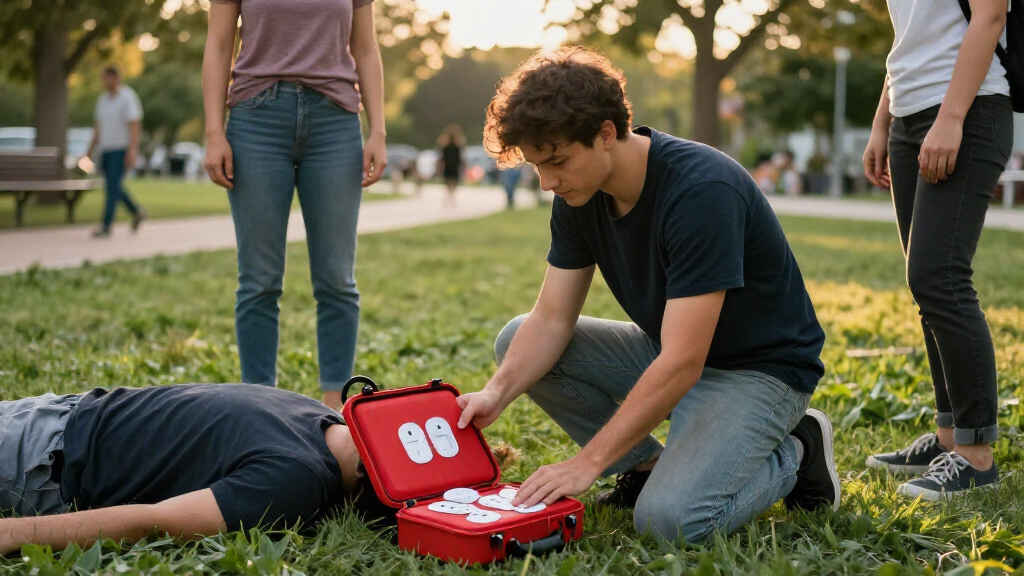
Portable AED choice is as much about readiness after purchase as it is about the device itself. I would compare storage, intended users, training plans, and ongoing supply support before deciding between similar-looking packages.
Match the AED to its setting and users
Start by listing who may need to reach the AED and where they are likely to be when an emergency occurs. A household device can stay in a known location, while an office, school, or gym may need a visible shared location and a process for keeping it accessible. A portable case helps with transport, but it does not replace clear signage or staff awareness. Avoid choosing a home-focused model for a public program without checking its instructions, support, and suitability for that environment. Also plan for situations where the person assisting has never handled an AED. The best fit is the package that matches the actual response plan, not the broadest use claim on a product page.
Compare the whole package, not the product name
Several listings here use the HeartStart OnSite name, yet their cases and included items vary. Before purchase, check the exact contents, including the device, pads or cartridges, battery, case, and any accessories described by the seller. A “value” or “business” label does not tell you which supplies are included or whether they suit your setting. Similar device names can also mask different bundle configurations across retailers. I would save the exact model and package details with the organization’s equipment records. This small check can prevent paying for duplicate accessories or discovering that a needed item was not part of the package.
Choose a storage format people can find and carry
A standard case, slim case, and Ready-Pack arrangement solve different storage problems. Slim storage may work better in a tight cabinet or a bag that travels, while a more substantial case can be easier to identify and retrieve in a shared space. Think about whether the AED will stay mounted, move between rooms, or travel to events. Check the dimensions against the intended storage spot rather than assuming “portable” means compact enough for every location. A case that is difficult to open or hidden among other equipment can slow access. Set one designated location and make sure the people responsible for the AED know where it is kept.
Plan for training and confidence
Training needs differ between a household and a workplace with rotating staff. The HeartStart Home option in this roundup includes a training-pads cartridge, which gives it a practice-oriented role distinct from the OnSite packages. A training feature is not a substitute for a recognized CPR and AED course, and it should not be confused with the pads intended for an emergency response. Decide who will receive training, how new staff will be included, and where practice materials will be stored. If several people may respond, choose a plan that remains usable when the most experienced person is absent. Familiarity with the steps can matter as much as choosing between two closely related bundles.
Check replacement supplies and readiness ownership
An AED purchase starts a maintenance task: someone must track its status and act when a battery or pads need replacement. Before buying, confirm that the correct replacement items are available for the exact model and that your organization has a way to monitor their dates. Keep a named person responsible for routine checks and a backup for absences. Do not assume that a package includes every future supply or that all pads fit every AED. For a shared setting, record inspection dates and make the process easy to follow. This planning can make a supported, clearly documented device a safer choice than a less familiar listing with unclear parts information.
Pay more only for a benefit you will use
A higher-priced bundle can make sense when it includes a case, training materials, or supplies that match a defined need, but extra items have little value if they will sit unused. Compare the contents line by line and account for the cost and availability of future replacement supplies. A slim case may be worthwhile when storage space is genuinely limited; a training cartridge may matter when practice is part of the household plan. For the generic AED listings, ask the seller for precise model identification, documentation, and supply compatibility before treating them as equivalent alternatives. Buyers should also check local requirements for public access programs. I would pay for a specific readiness or storage advantage, not for a package label alone.
Frequently Asked Questions
Are the Philips HeartStart OnSite listings different AEDs or different packages?
Several listings share the HeartStart OnSite name, so the differences presented here are mainly the package configuration, case, or intended buyer. The Standard Carry Case and Slim Carry Case versions highlight different storage needs, while Value, Business, and Ready-Pack names point to bundle variations that should be checked against the seller’s exact contents list. Do not infer a change in device capability from the package title alone. Confirm the model identifier and included pads, battery, and accessories before ordering. That comparison matters especially when replacing an existing unit or matching supplies already on hand.
Should I choose the HeartStart Home AED or an OnSite package for a household?
The Home AED listing is the clearest fit here for a household that wants a training-pads cartridge for practice. An OnSite package may make more sense when a buyer prefers its case or bundle setup and does not need that training feature. The product names alone do not settle every question about household suitability, so check the current manufacturer guidance and included instructions for the exact model. In either case, plan who will learn CPR and AED use and where the unit will be kept. A training cartridge should not be mistaken for emergency-use pads.
Is a slim carry case better than a standard case?
Neither case style is automatically better; the right choice depends on where the AED will be stored and how it will be moved. A slim case can suit a cramped cabinet or portable kit, while a standard case may be easier to identify and manage in a designated storage area. Measure the intended space and check how the case will be accessed under pressure. For shared locations, visibility and consistent placement may matter more than reducing bulk. Compare the included contents too, since case style is only one part of the package.
What should I verify before buying one of the generic portable AED listings?
Ask for the exact manufacturer and model number, current product documentation, and a complete list of included components. Confirm that replacement pads and batteries are available for that model and that their compatibility is clearly documented. Check who provides technical support and what warranty or service arrangements apply. A broad title such as “for home and public emergency use” does not establish that a device has the same support or documentation as a named product. If the seller cannot answer these questions clearly, I would favor a listing with more verifiable product details.
What ongoing tasks should I plan for after purchasing an AED?
Assign a person to check the AED on a schedule and follow the manufacturer’s instructions for readiness checks. Track the dates and status of the battery and pads, and arrange replacements before they are needed. Keep the device accessible, maintain its location information, and tell likely responders where it is. In workplaces and public settings, record checks and designate a backup person so the task does not lapse when someone is away. Training and a clear response plan should accompany the equipment rather than being treated as optional extras.
Conclusion
For most buyers in this roundup, I recommend the Philips HeartStart OnSite with Standard Carry Case as the best overall balance of a recognizable device and practical storage. The Value Package is my best value direction when its listed contents match what you need; compare the bundle carefully rather than relying on its name. For a premium or readiness-focused setup, look at the Ready-Pack and verify the included arrangement. Beginners and households focused on practice should consider the HeartStart Home AED with Training Pads Cartridge. Choose the Slim Carry Case for tighter storage, and select a business package for a shared organizational setting only after confirming its contents and support plan. I would consider either generic portable AED listing only after the seller supplies clear model, documentation, and replacement-supply details.