
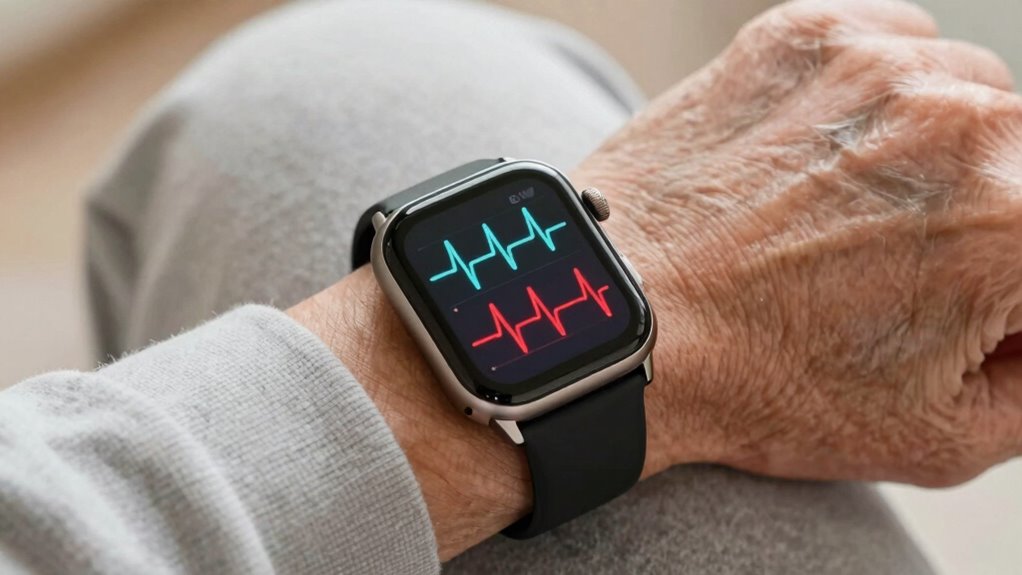
A smartwatch with ECG can add on-wrist heart rhythm readings, but the options here vary widely in what they actually measure. I’d choose the Samsung Galaxy Watch8 as the best overall smartwatch pick for buyers who want a current Samsung wearable, while the Fitbit Sense 2 stands out for health tracking and the Galaxy Watch4 for a lower-cost route into Samsung’s ECG features. The tradeoffs include phone compatibility, ECG app setup, battery life, and whether a device is a true smartwatch or a dedicated ECG monitor. Some watches listed here do not claim ECG functionality, so I separate those from the ECG-focused picks rather than treating them as equivalents. Read on for the full breakdown and guidance on choosing the right kind of heart monitoring.

Get health and wellness essentials delivered free with Prime
- Fast, free delivery on millions of items
- Prime Video, Amazon Music and more included
- Member-only deals all year
Key Takeaways
- The Galaxy Watch8 is the clearest current smartwatch pick in this group, while older Galaxy Watch models may appeal to buyers willing to accept an aging platform or renewed condition.
- Fitbit Sense 2 and the original Sense are health-first alternatives, but buyers should check current ECG app availability and phone support before choosing either.
- KardiaMobile is a dedicated 1-lead ECG monitor, not a smartwatch; it makes more sense for focused readings than for notifications, fitness tracking, or all-day wear.
- The two generic fitness watches do not list ECG, so their sport modes, Alexa, or call controls do not make them substitutes for ECG-capable models.
- Compatibility and setup matter as much as the sensor: ECG access may depend on region, phone, companion app, and account requirements, so verify these before buying.


| smartwatch with ecg | Model | Color | Connectivity | Battery life |
|---|---|---|---|---|
| Samsung Galaxy Watch4 40mm Blu | SM-R860NZKAXAA | Black | Bluetooth, GPS | — |
| Fitbit Sense 2 Health and Fitn | — | Shadow Grey/Graphite | — | 6+ days |
| Samsung Galaxy Watch 4 Classic | Galaxy Watch 4 Classic 46mm | Black | Bluetooth | — |
| Smart Watch for Men | — | — | — | 5–7 days; standby up to 30 days |
| Samsung Galaxy Watch8 Bluetoot | Galaxy Watch8 | Graphite | Bluetooth | — |
| KardiaMobile 1-Lead EKG Monito | — | — | — | — |
| Fitbit Sense Health and Fitnes | Sense | — | Bluetooth | Up to 6 days |
| Smart Watch with Alexa Built-i | — | — | — | 8–10 days |
More Details on Our Top Picks
Samsung Galaxy Watch4 40mm Bluetooth Smartwatch, Black
The Galaxy Watch4 40mm is my strongest all-around pick here for buyers who want ECG alongside a broad set of everyday health and smartwatch tools. It pairs ECG with heart-rate, sleep, SpO2, and body-composition tracking, while GPS and automatic workout recognition make it more useful for exercise than the ECG-focused KardiaMobile 1-Lead EKG Monitor. It also handles calls, texts, notifications, and music, so it can serve as a daily wrist companion rather than a single-purpose health device. Compared with the Fitbit Sense 2, Samsung offers body-composition tracking and Google app support, while Fitbit lists longer battery life and more exercise modes. The main catch is compatibility: some features depend on a Galaxy phone or Samsung Health, and ECG readings are not a diagnosis.
Pros:- Combines ECG with heart-rate, sleep, SpO2, and body-composition tracking
- Automatically tracks six activities and includes running coaching
- Supports calls, texts, notifications, music, GPS, and select Google apps
- Compact 40 mm case suits buyers who prefer a smaller watch
Cons:- Some features require a compatible Galaxy phone or Samsung Health
- ECG and body-composition readings are not intended to diagnose medical conditions
Best for: Android users, especially Galaxy phone owners, who want ECG plus workout, sleep, and body-composition tracking in a compact smartwatch.
Not ideal for: iPhone owners or buyers who want the longest listed battery life; some health features depend on Samsung devices or apps, and the Fitbit Sense 2 advertises more than six days of battery life.
- Model:SM-R860NZKAXAA
- Case size:40 mm
- Color:Black
- Connectivity:Bluetooth, GPS
- Health features:ECG, heart rate, sleep, SpO2, body-composition tracking
- Automatic workout tracking:6 activities
- Workout features:Running coaching and group challenges
Our verdict“Choose the Galaxy Watch4 if you want ECG within a compact, feature-rich Android smartwatch and can work with Samsung’s device requirements.”
Fitbit Sense 2 Health and Fitness Smartwatch, Shadow Grey/Graphite
The Fitbit Sense 2 is the better fit for buyers who want ECG as part of a wellness routine and would rather charge less often. Its advertised six-plus-day battery life is a clear advantage over the Galaxy Watch4’s more phone-like feature mix, while stress detection, sleep tracking, irregular heart rhythm notifications, and SpO2 broaden its health focus. Built-in GPS and more than 40 exercise modes also make it a capable activity companion without relying on a phone for location tracking. Compared with the Samsung Galaxy Watch4, the Sense 2 lists more exercise modes and longer battery life, but it does not list body-composition tracking or the same Google app support. Availability of health tools can vary by location and device, and some features may require Fitbit Premium or a nearby phone.
Pros:- Advertised battery life exceeds six days
- Pairs ECG with stress, sleep, heart-rate, SpO2, and irregular heart rhythm tools
- Built-in GPS and more than 40 exercise modes support phone-free workouts
- Water resistant to 50 meters
Cons:- Health features vary by country, device, or age
- Some features require Fitbit Premium or a nearby phone
Best for: People who want ECG, stress and sleep tracking, built-in GPS, and fewer charging interruptions in a wellness-focused watch.
Not ideal for: Buyers who want Samsung-style body-composition tracking or broad app use, or who need every listed health feature without country, device, or membership restrictions.
- Color:Shadow Grey/Graphite
- GPS:Built-in
- Water resistance:50 meters
- Battery life:6+ days
- Exercise modes:40+
- Health features:Stress detection, ECG app, irregular heart rhythm notifications, SpO2, heart-rate tracking
- Smart features:Bluetooth calls and notifications, Amazon Alexa, Google Wallet, Google Maps
Our verdict“Pick the Sense 2 if longer battery life and wellness tracking matter more to you than Samsung’s broader app and body-composition features.”
Samsung Galaxy Watch 4 Classic 46mm Smartwatch – Black (Renewed)
The Galaxy Watch 4 Classic 46mm makes the most sense for buyers who prefer a larger watch and a physical control they can turn, rather than relying only on a touchscreen. Its rotating bezel offers a distinct navigation approach, and the listing includes ECG, GPS, fitness tracking, sleep-cycle analysis, and fall detection. Compared with the smaller Galaxy Watch4 40mm, this Classic is the more substantial option, but the supplied details do not establish a broader health feature set or newer software support. It is also marked Renewed, which may suit buyers open to a refurbished device but adds uncertainty around condition and durability. I would choose it for the bezel and larger format, not on the assumption that it delivers more ECG capability than the standard Watch4.
Pros:- Rotating bezel gives a tactile way to navigate menus
- Includes ECG monitoring and GPS
- Lists fitness tracking, sleep-cycle analysis, and fall detection
Cons:- Renewed condition may bring more uncertainty about wear and durability
- The listing provides limited detail on battery life, connectivity beyond Bluetooth, and compatibility
- Its 46 mm size is less suited to buyers wanting a smaller watch
Best for: Buyers who want a larger Samsung smartwatch with ECG and prefer tactile rotating-bezel navigation to touchscreen-only controls.
Not ideal for: People seeking a compact watch, detailed battery or compatibility information, or the reassurance of a new-device condition; this listing is renewed and provides limited specifications.
- Model:Galaxy Watch 4 Classic 46mm
- Color:Black
- Connectivity:Bluetooth
- Version:US
- Condition:Renewed
- Health features:ECG monitoring and sleep-cycle analysis
- Other features:GPS, fitness tracking, fall detection, rotating bezel
Our verdict“Choose the renewed Watch 4 Classic if a 46 mm case and rotating bezel matter more to you than detailed condition and feature information.”
Smart Watch for Men, 1.39″ HD Touchscreen with 120 Sports Modes, Heart Rate & Sleep Monitoring, Bluetooth Call & Music Control, Fitness Tracker for iPhone/Android
This watch may appeal to buyers who want a large display and a long list of activity modes, but the supplied product details do not list ECG. That distinction matters in a roundup about ECG: heart-rate and sleep monitoring are not the same as an ECG feature. Compared with the Samsung Galaxy Watch4 and Fitbit Sense 2, which both explicitly include ECG, this model offers no stated ECG capability to weigh against its 120 sports modes, Bluetooth calling, or iPhone and Android compatibility. Its advertised five-to-seven-day battery life may suit people who prioritize basic activity tracking, though full functionality requires the Da Fit app and customization details are limited. I would consider it only if ECG is not a requirement; otherwise, the Samsung and Fitbit options are clearer choices.
Pros:- Lists 120 sports modes
- Compatible with iPhone and Android devices
- Bluetooth calling, message notifications, and music control are included
- Advertised battery life is five to seven days, with standby up to 30 days
Cons:- ECG is not listed, so it does not meet the central need of this roundup
- Full functionality requires the Da Fit app
- App customization details are limited, and step syncing begins after 20 steps
Best for: Buyers who want a large-screen, cross-platform fitness watch with many sports modes and do not need ECG.
Not ideal for: Anyone specifically shopping for an ECG smartwatch; ECG is not listed in the supplied product information, unlike on the Galaxy Watch4 and Fitbit Sense 2.
- Display:1.39-inch HD IPS touchscreen
- Resolution:240 x 240
- Sports modes:120
- Battery:350 mAh
- Compatibility:iPhone (iOS 9.0+) and Android (5.0+)
- Weight:40 g
- Battery life:5–7 days; standby up to 30 days
Our verdict“Skip this model if ECG is a must-have; consider it only for basic sports tracking and smartwatch functions without a stated ECG feature.”
Samsung Galaxy Watch8 Bluetooth Smartwatch, Graphite, 40mm (2025)
The Galaxy Watch8 40mm is the newer Samsung pick for buyers who value a lightweight design, running coaching, and a refreshed interface. Its stated health tools include sleep and heart-rate tracking, while the product details also describe blood-pressure tracking after calibration with a separate cuff. However, ECG is not listed in the supplied specifications, so I would not choose this model on the assumption that it fulfills an ECG requirement. The Galaxy Watch4 is the clearer choice in this lineup for explicitly stated ECG, alongside body-composition tracking. Watch8 supports Samsung and other Android phones, but some features still depend on compatible Samsung devices, apps, or accounts. The separate cuff requirement also adds setup and maintenance for blood-pressure tracking, making its health feature set less straightforward than the ECG-equipped options.
Pros:- Lightweight 40 mm design with an improved interface
- Includes sleep and heart-rate tracking plus running coaching
- Compatible with Samsung and other Android phones
- Lists a two-year warranty
Cons:- ECG is not listed in the supplied product details
- Blood-pressure tracking requires a separate cuff and periodic calibration
- Some features require a compatible Samsung phone, apps, or accounts
Best for: Android users interested in a lightweight newer Samsung watch, sleep and heart-rate tracking, and running coaching who do not require a listed ECG feature.
Not ideal for: Buyers whose main requirement is ECG; the supplied Watch8 product data does not list ECG, while the Galaxy Watch4 and Fitbit Sense 2 do.
- Model:Galaxy Watch8
- Year:2025
- Size:40 mm
- Color:Graphite
- Connectivity:Bluetooth
- Compatibility:Samsung and other Android phones
- Blood-pressure tracking:Requires calibration with a separately sold cuff
- Warranty:2 years
Our verdict“Choose the Watch8 for newer Samsung features and running coaching, but choose the Galaxy Watch4 or Fitbit Sense 2 if ECG is essential.”
KardiaMobile 1-Lead EKG Monitor
The KardiaMobile is the most focused ECG option here: it records a 30-second, single-lead EKG through a smartphone app, rather than acting as a general-purpose smartwatch. That makes it a useful companion for someone who wants a portable way to capture a heart rhythm reading, while the Fitbit Sense bundles ECG with GPS, notifications, and broader health tracking on the wrist. Its compact design and replaceable battery suit occasional readings without daily charging. The tradeoff is scope: it does not provide a watch display or continuous smartwatch functions, and it is not suitable for people with pacemakers or ICDs. It also cannot detect heart attacks or replace clinical care. Choose it for targeted ECG recording, not as a substitute for the Fitbit Sense or a smartwatch.
Pros:- Records an ECG in about 30 seconds
- Compact enough to carry for on-the-go readings
- Works with most smartphones through its app
- Replaceable battery is listed to last up to two years at 2–3 readings per day
Cons:- Requires a compatible smartphone and app for full functionality
- Does not provide smartwatch features such as a display, GPS, or notifications
- Not suitable for use with pacemakers or ICDs and does not detect heart attacks
Best for: People who want a compact, smartphone-connected device for occasional ECG recordings rather than a full smartwatch
Not ideal for: Buyers seeking wrist-based ECG, everyday smartwatch features, or a device suitable for use with a pacemaker or ICD
- Model number:AC-009
- ECG recording time:30 seconds
- Battery:Replaceable CR2016
- Listed battery life:Up to 2 years with 2–3 EKGs per day
- Smartphone compatibility:Compatible with most smartphones
- Included components:KardiaMobile
- Warranty:1 year
Our verdict“Choose KardiaMobile for portable, focused ECG recordings; choose the Fitbit Sense if you want ECG built into a broader smartwatch.”
Fitbit Sense Health and Fitness Smartwatch with GPS, ECG, Heart Rate, SpO2, Skin Temperature and Stress Tracking
The Fitbit Sense is the strongest fit for buyers who want ECG as part of a broader daily health and fitness watch. Alongside its ECG sensor, it tracks heart rate, SpO2, stress, sleep, and skin temperature, while built-in GPS and GLONASS let you record outdoor routes without relying on phone location. Compared with the KardiaMobile 1-Lead EKG Monitor, the Sense is more convenient for regular wrist-based use and adds notifications; KardiaMobile, however, is the more focused tool for standalone ECG readings. The Sense also offers 50-meter water resistance and up to six days of battery life, though actual endurance depends on use. It requires the Fitbit app and a compatible phone, so buyers who want a simple ECG device without a smartwatch ecosystem may prefer KardiaMobile.
Pros:- Combines ECG with heart rate, SpO2, stress, sleep, and skin temperature tracking
- Built-in GPS and GLONASS support phone-free route recording
- Water-resistant to 50 meters
- Provides call, text, calendar, and app notifications
Cons:- Requires the Fitbit app and a compatible iOS or Android smartphone
- Battery life is listed as up to six days and varies with use
- Broader smartwatch features may be unnecessary for buyers seeking only ECG readings
Best for: Fitness-minded buyers who want ECG alongside GPS, sleep, stress, and other health tracking on one smartwatch
Not ideal for: People who want a dedicated ECG monitor without app dependence, or who prefer a longer stated battery life than up to six days
- Model:Sense
- Model number:FB512GLWT-FRCJK
- Connectivity:Bluetooth
- GPS:Built-in GPS and GLONASS
- Health sensors:Heart rate, SpO2, ECG, stress, and skin temperature
- Water resistance:50 meters
- Battery life:Up to 6 days
- Compatibility:iOS 12.2 or higher; Android 7.0 or higher
Our verdict“Pick the Fitbit Sense if you want an ECG-capable smartwatch with substantial fitness and health tracking, rather than a dedicated monitor like KardiaMobile.”
Smart Watch with Alexa Built-in, 1.83″ HD Touchscreen, Fitness Tracker, 120+ Sport Modes, IP68 Waterproof, Compatible with Android & iOS
This watch offers a large 1.83-inch touchscreen, built-in Alexa, Bluetooth calling, and more than 120 sport modes, making it a feature-heavy option for everyday notifications and activity tracking. But for a roundup focused on smartwatches with ECG, the key distinction is that the supplied product details list heart-rate, sleep, and activity monitoring—not an ECG function. The Fitbit Sense is the clearer choice if ECG is a requirement, while this model may appeal to buyers who prioritize voice assistance and calling. Its listed battery life of 8–10 days is longer than the Sense’s stated up-to-six-day figure, though use can change runtime. Message replies are limited, and the provided information does not specify ECG, so I would not choose it for recording heart rhythms.
Pros:- Large 1.83-inch touchscreen with customizable dials
- Built-in Alexa and Bluetooth calling
- More than 120 sport modes
- Listed battery life of 8–10 days
Cons:- ECG is not listed among the supplied health-monitoring features
- Cannot reply to messages from the watch
- Battery life varies with usage
Best for: Android or iOS users who prioritize Alexa, Bluetooth calling, a large screen, and broad activity-mode selection over ECG
Not ideal for: Anyone specifically shopping for ECG recording or heart-rhythm monitoring; the supplied product details do not list an ECG feature
- Display:1.83-inch TFT-LCD touchscreen, 240 × 284 resolution
- Built-in Alexa:Yes
- Bluetooth:5.3
- Sport modes:120+
- Battery capacity:300 mAh
- Battery life:8–10 days
- Water resistance:IP68
- Health monitoring listed:Heart rate, sleep, and activity
Our verdict“Consider this watch for Alexa and everyday fitness features, but choose the Fitbit Sense if ECG recording is a requirement.”

How We Picked
I ranked the lineup by how directly each product serves someone searching for an ECG-capable wearable: whether ECG is explicitly listed, how the device fits into daily smartwatch use, the breadth of relevant health tools, and practical compatibility. I gave more weight to products that combine ECG with a usable watch experience than to devices that only offer general fitness tracking. I also treated the KardiaMobile as a different category: it offers a focused ECG function, but it is not a wrist-worn smartwatch.
The ranking reflects meaningful differences rather than treating every listing as an equivalent ECG option. The Galaxy Watch8 leads as the newer Samsung smartwatch in this group; the Fitbit Sense models and older Galaxy watches remain alternatives with distinct platform and age tradeoffs. The generic watches rank below them because their listed features do not include ECG. Before purchase, I’d verify regional ECG availability, phone compatibility, and app requirements, since those can determine whether the headline function is usable.
| smartwatch with ecg | Model | Color | Connectivity |
|---|---|---|---|
| Samsung Galaxy Watch4 40mm Blu | SM-R860NZKAXAA | Black | Bluetooth, GPS |
| Fitbit Sense 2 Health and Fitn | — | Shadow Grey/Graphite | — |
| Samsung Galaxy Watch 4 Classic | Galaxy Watch 4 Classic 46mm | Black | Bluetooth |
| Smart Watch for Men | — | — | — |
| Samsung Galaxy Watch8 Bluetoot | Galaxy Watch8 | Graphite | Bluetooth |
| KardiaMobile 1-Lead EKG Monito | — | — | — |
| Fitbit Sense Health and Fitnes | Sense | — | Bluetooth |
| Smart Watch with Alexa Built-i | — | — | — |
Factors to Consider When Choosing Smartwatch With Ecg
Choosing an ECG wearable starts with confirming that it can perform the specific measurement you want, then checking whether its apps and phone support fit your routine. These broader checks can prevent a common mismatch: buying a watch with appealing fitness features that does not provide ECG.
Confirm ECG Is Actually Listed
Do not infer ECG support from heart-rate tracking, an oxygen sensor, or a long list of sports modes. ECG records electrical signals from the heart, while optical heart-rate sensors estimate pulse using light; the functions are not interchangeable. Check the exact model name and the manufacturer’s current feature list, since a product family can include versions with different capabilities. Also verify that the ECG feature is available in your country and through the app you plan to use. This matters especially when comparing the two generic fitness watches here, whose listed features do not include ECG. If ECG is your main reason to buy, treat an unlisted capability as unavailable until confirmed by the maker.
Check Phone, Region, and App Requirements
A watch can have ECG hardware yet still be a poor fit if its companion app or feature access does not work with your phone. Compatibility can depend on the phone operating system, the watch’s own software, regional approval, and account setup. Before ordering, check the manufacturer’s current compatibility page for your exact phone and country rather than relying on broad claims such as “works with iPhone and Android.” Also look for any app installation or permissions required to view and save readings. Buyers switching phone platforms should be especially careful, since some health functions may be limited even when basic notifications work. A short compatibility check can matter more than choosing between two similar sensor lists.
Decide Whether You Need a Smartwatch or an ECG Monitor
A smartwatch combines ECG with wrist notifications, activity tracking, and other daily tools; a dedicated monitor focuses on taking an ECG reading. The KardiaMobile belongs to the second category, so it should not be judged by smartwatch standards such as screen size or wrist-based convenience. A dedicated device may suit someone who wants a focused reading tool and does not need an always-worn display. A smartwatch is usually a better match for people who want health features alongside calls, apps, and fitness data. Think about when and where you expect to take readings, not just which device advertises ECG. This distinction prevents paying for a watch when a portable monitor better matches the intended task, or expecting a monitor to replace a watch.
Match Health Features to Your Actual Routine
ECG is only one part of a wearable’s health toolkit, and a larger feature list is not automatically more useful. Consider whether you’ll make regular use of stress tools, sleep tracking, GPS, or exercise tracking, and whether those features are available on your phone and in your region. For example, a health-focused Fitbit may suit someone who wants broader wellness tracking, while a Samsung watch may be more appealing within a Samsung phone setup. Avoid choosing based solely on the number of tracked metrics; some features need frequent charging, app engagement, or manual setup. A simpler watch can be easier to maintain if you only want occasional ECG readings and basic activity tracking. Prioritize the functions you’ll check often over those that look impressive on a specification list.
Balance Age, Condition, and Long-Term Support
Older models can still offer useful features, but their remaining software support and battery condition deserve attention. That is particularly relevant when comparing the Galaxy Watch4 models with the newer Galaxy Watch8, and when considering a renewed Classic listing. Ask what condition grading, return terms, and battery coverage apply to renewed hardware. A lower-cost older watch may be a sensible choice if its ECG function works with your setup and you accept fewer years of updates. If you want a device to keep for longer, a newer model can reduce concerns about aging software and component wear. Compare the expected ownership period with the device’s age instead of judging only by the initial feature set.
Treat ECG as a Wellness Tool, Not a Diagnosis
Consumer ECG features can record heart rhythm information, but they do not replace clinical evaluation or emergency care. Read the maker’s guidance on what the watch can and cannot detect, and how to share a reading with a healthcare professional. A normal result should not be used to dismiss symptoms, and an alert is not by itself a diagnosis. If you have a known heart condition or are buying at a clinician’s suggestion, ask which device and reading format would be useful for your care. Also check whether readings can be saved or exported in a form your clinician can review. This helps set realistic expectations before choosing a wearable for health monitoring.
Frequently Asked Questions
Do all eight products in this roundup have ECG?
No. ECG is explicitly listed for the Fitbit Sense models and the Samsung Galaxy Watch models, subject to compatible app, phone, and regional availability. KardiaMobile is a standalone 1-lead ECG monitor rather than a smartwatch. The two generic fitness watch listings mention heart-rate monitoring and other features but do not list ECG. I would not buy either generic model expecting an ECG function unless the seller or manufacturer confirms it for that exact version.
Can I use a Samsung Galaxy Watch ECG feature with any phone?
Do not assume so. Samsung ECG features rely on supported software and app availability, and compatibility can vary by phone model, operating system, and region. Basic watch functions may work even when a particular health feature is unavailable. Check Samsung’s current support information for the exact watch and phone combination before buying. If ECG access is the main reason for choosing a Galaxy Watch, confirm the feature works where you live and on the phone you already own.
Should I choose KardiaMobile instead of an ECG smartwatch?
Choose KardiaMobile if your priority is a dedicated, portable 1-lead ECG device and you do not need a wrist display or everyday smartwatch features. Pick a smartwatch if you want ECG alongside notifications, activity tracking, and other on-wrist functions. The two device types serve different routines, so neither is a direct substitute for the other. Check how readings are captured, stored, and shared before deciding, especially if a healthcare professional requested a particular format. A consumer ECG device does not diagnose a condition or replace medical advice.
Is an older Galaxy Watch4 still a sensible ECG choice?
It can be, if the specific watch remains compatible with your phone and the ECG app is available in your region. Compared with the newer Galaxy Watch8, the Watch4 is an older platform, so software support and battery wear deserve more attention. For a renewed Watch4 Classic, check the seller’s condition details, return policy, and battery coverage as well. A buyer who wants a longer ownership horizon may prefer the newer model, while someone comfortable with an older device may find the Watch4 features sufficient. Verify ECG access before treating it as a dependable option.
Can a smartwatch ECG reading tell me whether I have a heart problem?
No. A smartwatch ECG can capture a limited heart rhythm reading, but it is not a full medical evaluation and cannot rule out every heart problem. Read the device’s instructions and discuss concerning results with a healthcare professional. Do not delay urgent care because a watch shows a normal reading, particularly if you have serious symptoms. If a clinician recommended ECG monitoring, ask whether a watch reading is suitable for your situation. The best device is the one that fits that guidance and can provide readings in a useful format.
Conclusion
For most buyers seeking a wearable ECG option, I’d start with the Samsung Galaxy Watch8 as the best overall pick in this lineup, provided its ECG feature works with your phone and region. The Galaxy Watch4 is the best value-style choice for buyers comfortable with an older model, while the Fitbit Sense 2 is the strongest fit for people who prioritize health and wellness tracking alongside ECG. The original Fitbit Sense can suit shoppers comparing older Fitbit hardware, but its age makes support and condition checks especially important. For beginners who want a general-purpose smartwatch, the Galaxy Watch8 is the easiest starting point here; for someone who only needs focused ECG readings, choose KardiaMobile instead. Skip the two generic fitness watches if ECG is non-negotiable, since their listed features do not include it.