
TL;DR

Get health and wellness essentials delivered free with Prime
- Fast, free delivery on millions of items
- Prime Video, Amazon Music and more included
- Member-only deals all year
A study published in the Journal of the National Cancer Institute found that about 6 in 10 highly frail older breast cancer survivors had no Medicare home health care in a given year. The study measured service use, not whether participants qualified, and did not include Medicare Advantage. Its lead author says Medicare’s limits on home health coverage may leave some people who need personal care without support.
A study published October 20 in the Journal of the National Cancer Institute found that about 6 in 10 highly frail older breast cancer survivors had no Medicare home health care in a given year. The finding points to a potential gap between survivors’ support needs and traditional Medicare coverage, which generally ties home health services to skilled care and homebound status.
The researchers examined 347,953 survivor-years involving 134,410 women aged 66 or older who had invasive breast cancer and were between two and 10 years past diagnosis. The data covered 2017 to 2020 and combined cancer registry records with Medicare enrollment and claims, as well as assessments completed by nurses and therapists when home health care began.
Researchers classified about 7% of survivors as highly frail in a given year. Around 40% of that group used Medicare home health care, meaning most did not. Across all survivors in the study, 11% used the service. The team developed a claims-based frailty score using diagnoses and medical equipment, then calibrated it against the frailty index used in in-home assessments.
Frailty in the study included accumulated health problems and functional limitations, such as difficulty bathing or dressing, trouble walking, falls, memory problems, incontinence and exhaustion. The analysis tracked whether participants used home health care; it did not determine whether they qualified for the benefit. Medicare Advantage enrollees were not included.
Coverage Rules May Miss Personal Care Needs
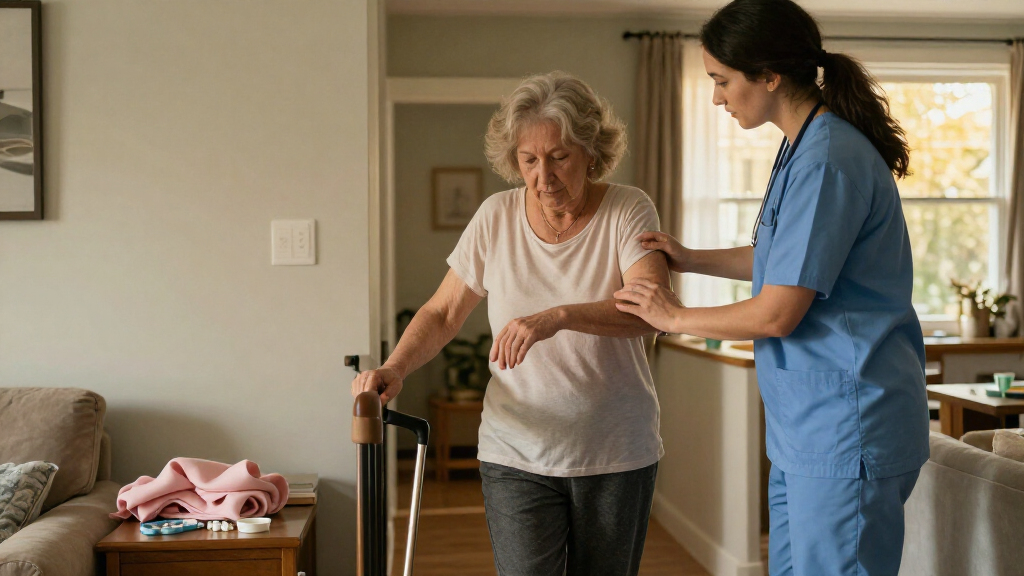
The results matter because a person can have substantial difficulty with daily activities yet not receive Medicare-covered home health care. As the report explains, traditional Medicare generally covers personal care at home only when it is connected to a skilled need and the person is homebound. Survivors who mainly need assistance with bathing, dressing or other personal care, or who do not meet the homebound condition, may not fit those coverage rules.
Lead author Dr. Xuanzi Shirley Qin said that without support at home, highly frail people may face greater risk of falls or hospital stays. That is a concern raised by the study’s authors, not an outcome measured by this analysis. The findings also matter to health systems and policymakers as more people live for years after breast cancer treatment and may experience needs related to aging.
home care personal assistance for seniors
As an affiliate, we earn on qualifying purchases.
As an affiliate, we earn on qualifying purchases.
How the Study Measured Frailty
The study focused on women who were at least two years beyond diagnosis, rather than only people receiving active cancer treatment. Qin said survivors six to 10 years after diagnosis were as frail as those two to five years afterward. She suggested their needs may reflect aging more than cancer treatment effects; the study reports the comparison but does not establish the cause of frailty.
The research team linked records from the SEER cancer registry with Medicare claims and the Outcome and Assessment Information Set, known as OASIS. OASIS assessments are completed by nurses and therapists when home health care starts. The researchers used those assessments to calibrate a claims-based frailty score, allowing them to estimate frailty among survivors who had never received a home health assessment.
The report notes that the United States has about 4 million breast cancer survivors. That figure helps explain the potential reach of survivorship-care policy, but the study itself examined a specific group of older women with invasive breast cancer and traditional Medicare data from 2017 through 2020.
“In a given year, about 6 in 10 highly frail survivors had none.”
— Dr. Xuanzi Shirley Qin, lead author and assistant professor at the University of Maryland School of Public Health
As an affiliate, we earn on qualifying purchases.
Eligibility Was Not Tested
The study establishes how often survivors used Medicare home health care, but not how many were eligible or were denied services. It also does not show why each person went without care, whether they received help from family or other sources, or whether a lack of home health caused falls or hospital stays.
Because the research excluded Medicare Advantage, its results do not describe home health use among people enrolled in those plans. The data also end in 2020, so the analysis does not establish whether service use or coverage patterns have changed since then. The study’s proposed link between longer-term frailty and aging, rather than treatment effects, remains an interpretation rather than a proven cause.
frailty assessment tools for elderly
As an affiliate, we earn on qualifying purchases.
As an affiliate, we earn on qualifying purchases.
Screening and Coverage Proposals
Qin said some clinics are beginning to screen survivors for frailty, but current survivorship guidelines do not yet call for routine screening. She said the findings support making it part of follow-up care and called for Medicare to cover personal care at home needed by frail survivors. The report does not identify a specific policy change or timeline.
Further research could clarify who is eligible but not receiving services, how people meet personal-care needs when Medicare home health is unavailable, and whether the findings apply to Medicare Advantage enrollees. For now, the study documents a substantial gap in use among highly frail survivors, while leaving the reasons for that gap and the best policy response open.
fall prevention equipment for seniors
As an affiliate, we earn on qualifying purchases.
As an affiliate, we earn on qualifying purchases.
Key Questions
What did the study find?
About 6 in 10 highly frail older breast cancer survivors in the study had no Medicare home health care in a given year. The study measured use, not eligibility.
Who was included in the research?
The analysis covered 134,410 women aged 66 or older with invasive breast cancer, from two to 10 years after diagnosis. It used 2017–2020 data and did not include Medicare Advantage enrollees.
Why might a frail person lack Medicare home health care?
According to the report, traditional Medicare generally covers personal care at home only when it is tied to a skilled need and the person is homebound. The researchers did not establish why each participant did or did not receive care.
Did the study show that lack of home health caused falls or hospital stays?
No. Qin said people without support at home may face higher risks of falls or hospital stays, but this study measured service use and did not test whether missing home health caused those outcomes.
Source: rss
Halloween Picks
halloween
As an affiliate, we earn on qualifying purchases.