

TL;DR

Get health and wellness essentials delivered free with Prime
- Fast, free delivery on millions of items
- Prime Video, Amazon Music and more included
- Member-only deals all year
Biograph says its first U.S. study using Caristo Diagnostics’ AI technology found elevated coronary inflammation in 42.9% of asymptomatic, conventionally low-risk participants. The company also reported that routine blood tests and risk measures did not identify who had inflammation; the study does not establish whether the finding predicts future heart disease or whether acting on it improves outcomes.
Biograph reported that an analysis using Caristo Diagnostics’ AI-powered CaRi-Heart technology found elevated coronary inflammation in 42.9% of asymptomatic participants classified as low risk. The company says the findings suggest conventional blood tests and cardiovascular risk measures did not identify the participants with inflammation, but the study does not establish whether the finding predicts later heart disease or whether intervention based on it improves health outcomes.
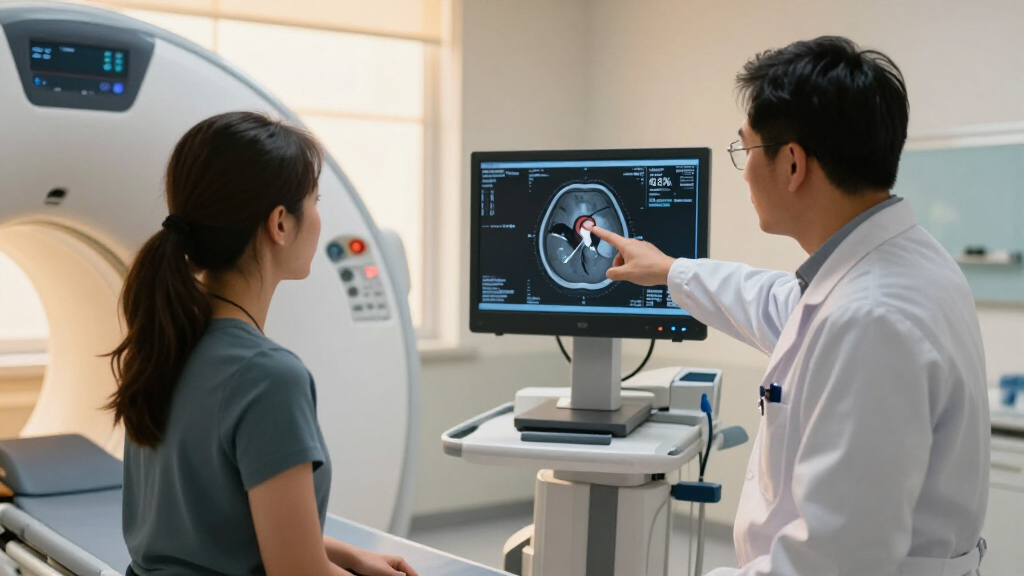
The study combined coronary CT angiography (CCTA) with cardiometabolic profiling and AI analysis, according to Biograph’s announcement. CaRi-Heart was used to assess inflammation around the coronary arteries; CaRi-Plaque was also part of the collaborative methodology for evaluating plaque. Biograph described the research as its first U.S. study using the technology in asymptomatic, low-risk individuals.
Biograph reported that 17.9% of participants had very high inflammation in at least one major heart artery. It also said about 47% of participants with no detectable coronary plaque nevertheless had elevated perivascular inflammation. These percentages refer to the study participants; the announcement does not provide enough information here to determine how representative they are of the wider population.
The company said inflammation did not correlate with routine measures including ApoB, non-HDL cholesterol, HbA1c, hs-CRP or the AHA PREVENT-ASCVD risk calculator. That is a reported finding from this study, not evidence that those tests are generally ineffective for cardiovascular assessment. Biograph said the study manuscript is available as a preprint.
What the CT Inflammation Finding Could Add
The reported results point to a possible gap between conventional risk assessment and an imaging measure of inflammation around the coronary arteries. If further research confirms the finding and shows that it predicts outcomes, the measure could add information about some people whose plaque burden, bloodwork or calculated risk appears low. The reported 47% figure among participants without detectable plaque is relevant to that possibility, but it does not prove those participants will develop coronary disease.
For readers, the distinction is between detecting a biological signal and showing that it changes a person’s prognosis or care. The announcement does not report that the study tested a treatment strategy, prevented heart attacks, or demonstrated improved outcomes. The authors’ call for validation and prognostic research means the result should be understood as an early research finding, not a new diagnosis or a basis on its own for treatment decisions.
As an affiliate, we earn on qualifying purchases.
How the Study Assessed Coronary Inflammation
Biograph describes itself as a preventive health and diagnostics clinic. Its study used high-resolution CCTA imaging alongside cardiometabolic profiling, with Caristo’s AI tools applied to coronary scans. CaRi-Heart assesses perivascular inflammation, while CaRi-Plaque is intended to assess plaque and stenosis. The announcement says the study was available to clinically eligible Biograph Black tier members.
According to the company, CaRi-Heart has received U.S. FDA De Novo marketing authorization, and CaRi-Plaque has FDA clearance. Those regulatory statuses relate to the products; they do not, by themselves, establish the clinical importance of this study’s percentages or show that using the analysis improves patient outcomes. Biograph’s announcement presents the research as a study of prevalence and potential risk assessment, while acknowledging that more evidence is needed.
““More than 42% of asymptomatic, conventionally low-risk adults had elevated coronary inflammation.””
— Biograph’s study announcement
AI-powered cardiac inflammation detection device
As an affiliate, we earn on qualifying purchases.
As an affiliate, we earn on qualifying purchases.
Questions About Risk and Outcomes Remain
The announcement does not give enough detail to assess the study’s participant count, recruitment methods, or demographic makeup, and it does not establish how closely the sample represents adults generally. It also does not report a follow-up period or show whether participants with elevated inflammation later experienced heart attacks or other cardiovascular events.
It remains unclear how well the AI measure predicts outcomes beyond existing clinical assessments, what level of inflammation should change care, and whether treatment guided by the result benefits patients. The company’s announcement says the findings suggest a potential limitation in traditional assessment, but the study’s reported results do not establish that routine tests are inadequate for their intended uses or that AI analysis should replace them.
As an affiliate, we earn on qualifying purchases.
Validation and Follow-Up Evidence Needed
Biograph says the study manuscript is available as a preprint, allowing readers to review the research. The next evidentiary steps are independent scrutiny and further studies that test whether coronary perivascular inflammation predicts cardiovascular events over time. Research would also need to assess whether decisions based on the AI result improve outcomes compared with standard care.
Until those questions are answered, the reported prevalence is a finding in the studied group, not a population-wide estimate or proof of future disease. The announcement does not specify a timeline for additional studies or for any change in clinical practice.
As an affiliate, we earn on qualifying purchases.
Key Questions
What did the study report?
Biograph reported that 42.9% of asymptomatic, low-risk participants had elevated coronary inflammation on AI analysis of coronary CT scans. It said 17.9% had very high inflammation in at least one major heart artery.
Does coronary inflammation mean a participant has heart disease?
Not on the basis of this result alone. The announcement reports an imaging finding and does not establish that participants with inflammation had diagnosed heart disease or would later develop it.
Did standard blood tests identify the inflammation?
Biograph said the measures it examined—including cholesterol markers, HbA1c, hs-CRP and the PREVENT-ASCVD calculator—did not identify which participants had coronary inflammation. This is the company’s report of this study, not a general finding that such tests have no clinical value.
Does the result show AI-guided care prevents heart attacks?
No. The announcement does not report a trial of AI-guided treatment or evidence of reduced heart attacks. It says further research is needed to establish the finding’s prognostic value and whether care directed at this inflammation benefits patients.
Source: hn
Cold & flu season Picks
humidifiers
As an affiliate, we earn on qualifying purchases.