
TL;DR

Get health and wellness essentials delivered free with Prime
- Fast, free delivery on millions of items
- Prime Video, Amazon Music and more included
- Member-only deals all year
SINTEF researcher Sandra Klonteig says neurotechnology could eventually help detect brain changes linked to anxiety and depression and show whether a treatment is working. The report describes research approaches including eye-tracking and non-invasive brain measurements, but does not establish that these methods can yet diagnose patients or select effective treatments in routine care.
Sandra Klonteig, a research scientist at Norway’s SINTEF Digital, says neurotechnology could eventually help clinicians detect brain changes associated with anxiety and depression and assess whether a treatment is working. The prospect matters because anxiety and depression are common, but the methods described in the report are research approaches, not established tools for routine diagnosis or treatment selection.
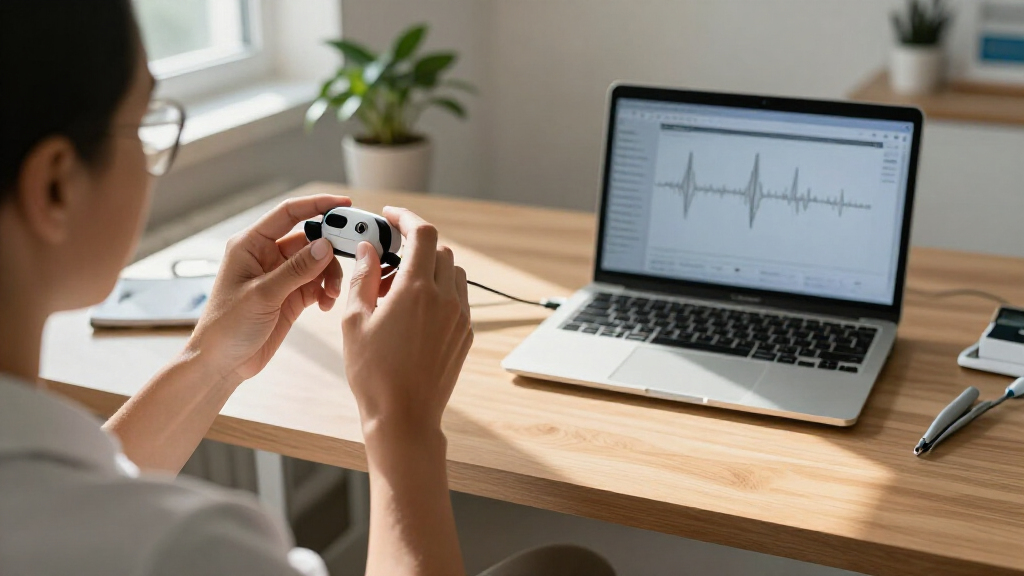
Klonteig studies the brain using sensors and neurotechnology, including functional near-infrared spectroscopy, or fNIRS. The technique measures changes in blood flow that can provide information about brain activity. The report also discusses eye-tracking, which records where a person looks and may help researchers study attentional bias: a tendency to focus on negative or threatening information.
Another research direction is examining functional brain networks—how regions communicate and work together in relation to cognitive and emotional functions. Klonteig says non-invasive approaches, such as sensor-equipped headgear, are more practical for research and potential clinical use than invasive procedures for every patient. The report does not give trial results, diagnostic accuracy figures, or evidence that these tools improve outcomes for people receiving care.
Klonteig describes a possible future in which measurements help clinicians choose a treatment and monitor biological changes before a patient notices a difference in symptoms. If testing suggests a treatment is not having the intended effect, a clinician might consider another option sooner. These are proposed uses; the report presents them as potential benefits rather than results already demonstrated in clinical practice.
Could Brain Measures Shorten Treatment Delays?
If future studies validate the approach, brain measurements could offer clinicians additional information when deciding whether to continue or change a treatment. Today, patients and clinicians may have to wait for symptoms to change before judging whether an intervention is helping. A reliable biological measure might, in principle, provide an earlier signal and reduce some of that uncertainty.
The possible benefit is not limited to speed. Anxiety and depression do not affect everyone in the same way, and treatment response can vary. Measures linked to brain activity could eventually help researchers understand those differences and test more individualized treatment strategies. However, the report does not show that neurotechnology can currently identify the best treatment for a particular person, or that a brain signal would reliably predict recovery.
The distinction matters for patients: a promising research tool is not the same as a validated clinical test. Any adoption would require evidence that measurements are accurate, useful across different people and settings, and capable of improving care beyond existing assessment methods.
functional near-infrared spectroscopy brain sensor
As an affiliate, we earn on qualifying purchases.
As an affiliate, we earn on qualifying purchases.
From Brain Sensors to Mental Health Research
Klonteig began focusing on neurotechnology during her PhD at OsloMet and now works at SINTEF Digital, where she researches the brain and human body using sensors. Neurotechnology includes methods for measuring brain activity and, in some applications, influencing or regulating it. The field also covers work beyond mental health, including research into brain injury and disease.
The report cites the World Health Organization as saying more than one billion people are living with mental health disorders, with anxiety and depression among the most common. It also places the research amid broader efforts that use non-invasive brain measurements, artificial intelligence, and other technologies to study health. Those examples describe a wider research field; they do not establish that all such methods are ready for clinical use.
Klonteig’s account centers on a core research problem: identifying brain mechanisms associated with mental disorders and finding ways to measure them. Eye-tracking may help examine how attention is directed, while fNIRS and network analysis investigate other features of brain function. Researchers would need to determine how these measurements relate to symptoms and treatment response before they could guide individual care.
“The potential within neurotechnology is too significant to ignore. This is where the solutions of the future lie.”
— Sandra Klonteig, research scientist at SINTEF
eye-tracking attention bias device
As an affiliate, we earn on qualifying purchases.
As an affiliate, we earn on qualifying purchases.
Clinical Evidence Is Still Needed
The report does not specify whether the described methods have been tested in large clinical studies of people with anxiety or depression, or whether any have been approved for routine diagnosis or treatment monitoring. It provides no figures on accuracy, false results, or how well measurements predict response to particular therapies.
It also remains unclear how researchers would distinguish disorder-related signals from normal differences between people, and whether results would be consistent across devices, clinics, and populations. A brain measurement would need to complement clinical assessment safely and reliably; the report does not establish that it can do so now. No patient data, study timeline, or named clinical trial is given.
non-invasive brain activity monitor
As an affiliate, we earn on qualifying purchases.
As an affiliate, we earn on qualifying purchases.
Validation Before Clinical Use
The next step described by Klonteig’s research is to better understand the brain mechanisms associated with mental disorders and develop ways to measure relevant activity, including through non-invasive sensors. The report gives no specific date for a clinical trial, product launch, or change to treatment guidelines.
For these approaches to influence care, future studies would need to test whether the measurements reliably track symptoms or treatment response and whether using them leads to better patient outcomes. Until such evidence is available, neurotechnology’s role in anxiety and depression treatment remains a research possibility, not a replacement for established clinical evaluation.
As an affiliate, we earn on qualifying purchases.
Key Questions
What does neurotechnology mean in this report?
It refers to technologies used to measure or study brain activity, including fNIRS, eye-tracking, and analysis of communication between brain regions. Some neurotechnology can also influence brain activity, but the report focuses on measurement and research.
Can these methods diagnose anxiety or depression now?
The report does not say that the methods described are established diagnostic tools. It presents them as ways researchers are investigating brain activity and possible links to mental health conditions.
How might brain measurements help with treatment?
Klonteig says measurements could eventually help clinicians assess whether a treatment is producing biological changes, potentially before symptoms improve. That use remains a possibility and is not shown as proven clinical practice in the report.
What is fNIRS?
Functional near-infrared spectroscopy measures changes in blood flow in the brain. Those changes can provide information about which areas are active, though the report does not give evidence that fNIRS can independently select treatment for an individual.
What evidence is still needed?
Studies would need to establish how accurate and consistent the measurements are, whether they predict treatment response, and whether using them improves outcomes for patients. The report does not provide those results or a timeline for clinical adoption.
Source: rss
Fall Picks
fall essentials
As an affiliate, we earn on qualifying purchases.