
TL;DR

Get health and wellness essentials delivered free with Prime
- Fast, free delivery on millions of items
- Prime Video, Amazon Music and more included
- Member-only deals all year
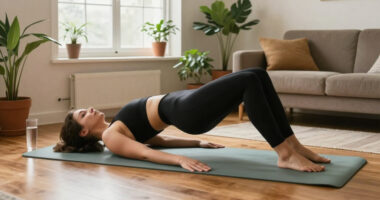
Fit&Well has published a five-move, squat-free Pilates leg workout for home, designed by Pilates instructor Lottie Anderson. The sequence uses bodyweight movements and calls for two rounds of 8 to 12 repetitions per side; ankle weights are optional, according to the report.
Fit&Well has published a five-move Pilates leg routine that can be done at home without squats, offering an alternative for people who find the exercise uncomfortable or difficult. Pilates instructor Lottie Anderson, founder of London studio Bondi Rise, recommends two rounds of 8 to 12 repetitions per side for each movement; ankle weights are optional.
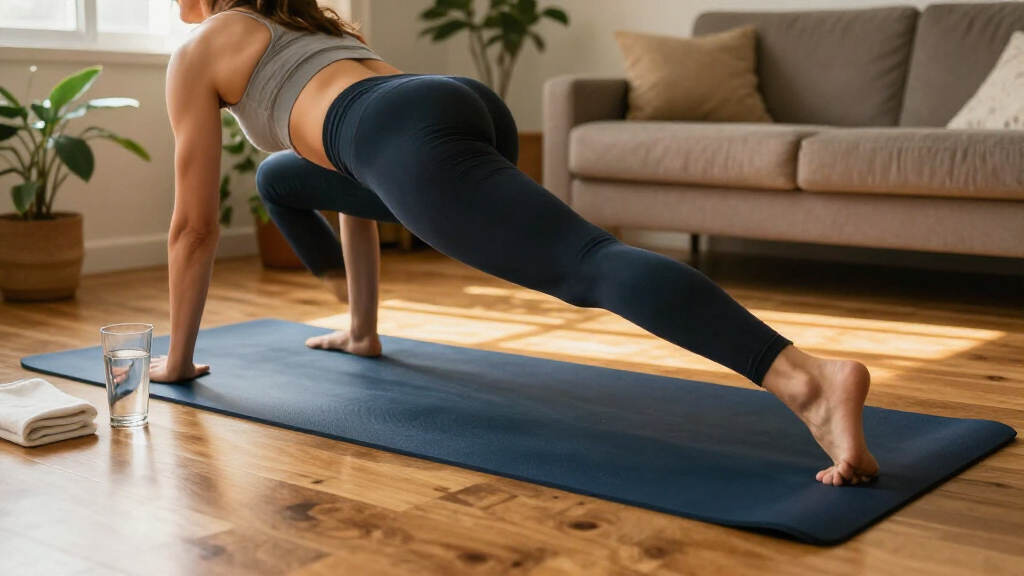
The sequence includes horse kicks, rainbow kicks and hamstring extensions, followed by two kneeling side-leg exercises: lift-and-lowers and side kicks. The first three begin on hands and knees, with wrists beneath shoulders and knees beneath hips. The final two use a kneeling side-plank position, supported by one hand and the knee on the same side.
For horse kicks, extend one leg behind the body, then lift it to hip height while keeping it straight and the hips steady. Rainbow kicks use a similar starting position, but the raised leg sweeps in an arc to tap the floor on either side. For hamstring extensions, bend the extended knee to bring the heel toward the buttocks, then straighten the leg again. The instructions recommend keeping the thigh lifted throughout that movement if possible.
In the final pair, turn into a supported kneeling side plank and lift the outside leg to about hip height for repeated taps. For side kicks, extend the leg in line with the hips, draw the knee toward the chest and straighten it again. The routine specifies two rounds of 8 to 12 repetitions on each side for every exercise. The report says Anderson sometimes uses ankle weights to make the movements harder, but says they are not required.
A Squat-Free Option for Leg Training
The routine gives readers a structured way to work on lower-body strength without making squats the central exercise. That may be useful for people who have trouble performing squats comfortably: Fit&Well’s report points to tight hamstrings, limited ankle mobility, balance concerns and tender joints as possible barriers. It does not claim that this sequence is suitable for everyone or that it addresses the cause of those difficulties.
Anderson says leg strength supports ordinary activities such as getting up from the floor, carrying a child and climbing stairs. She also highlights the glutes, saying they help stabilize the pelvis and support the lower back and knees. These are the instructor’s explanations in the report, rather than results from a study presented with the workout. The practical takeaway is narrower: the five movements offer a bodyweight routine that can be attempted at home, with optional resistance rather than required equipment.
Products Worth Considering

Bowflex SelectTech 840 Adjustable Kettlebell

Hyperice Normatec 3 Leg Compression Boots – Full Leg Recovery, Standard Size

Oral-B iO5 Rechargeable Electric Toothbrush with 5 Cleaning Modes
As an affiliate, we earn on qualifying purchases.
Why the Routine Avoids Squats
Squats are commonly used in lower-body workouts and, as the report describes, can strengthen the thigh muscles. But they are not comfortable or accessible for everyone. Fit&Well frames the routine as an alternative for readers who want to train their legs without squatting, rather than as a replacement prescribed for a particular injury or health condition.
Anderson’s advice is tied to a Pilates sequence built around controlled leg movements and maintaining a stable trunk and pelvis. The source provides exercise instructions and a repetition range, but does not cite clinical research, compare the routine with a squat-based workout or report measured strength outcomes.
“Your legs carry you through everything.”
— Lottie Anderson, Pilates instructor and founder of Bondi Rise, as quoted by Fit&Well
Limits of the Workout Report
The source does not provide a publication date, independent testing or evidence about how much strength a person might gain from following the routine. It also does not set out modifications for people with pain, mobility limitations or balance problems, despite presenting the workout as an option for readers who may struggle with squats. The report does not establish that the movements are appropriate for every reader.
It is also unclear how long the routine takes, how often readers should repeat it, or whether the five exercises are intended to form a full training program on their own. The instructions give a repetition range and number of rounds, but no progression schedule beyond the option to add ankle weights. Anyone unsure whether these movements are appropriate for them may want to seek guidance from a qualified fitness or health professional.
How Readers Can Use the Sequence
The published instructions lay out the sequence for readers to follow at home: complete two rounds of each movement, working through 8 to 12 repetitions on one side before switching to the other. The source presents ankle weights as optional, not necessary. It does not announce a follow-up program or specify when the routine should be repeated.
Readers following the instructions can use the listed setup and cues to perform each movement, including keeping the hips steady during kicks and the waist lifted during the side-plank exercises. The report offers no advice for working through pain, so discomfort should not be treated as a reason to push through the movements. No additional research findings or updates are included in the source material.
Key Questions
What exercises are in the five-move Pilates leg workout?
The routine consists of horse kicks, rainbow kicks, hamstring extensions, kneeling lift-and-lowers and kneeling side kicks.
How many repetitions does the routine recommend?
Fit&Well lists two rounds of 8 to 12 repetitions per side for each exercise.
Do you need ankle weights?
No. Anderson uses ankle weights to increase difficulty, but the report says they are optional and are not needed to try the movements.
Is the workout suitable for anyone who cannot squat?
The report presents it as a squat-free alternative, but does not say it is suitable for everyone or provide adaptations for specific conditions. Readers uncertain about the movements should seek advice from a qualified professional.
Source: fitandwell.com