

TL;DR

Get health and wellness essentials delivered free with Prime
- Fast, free delivery on millions of items
- Prime Video, Amazon Music and more included
- Member-only deals all year
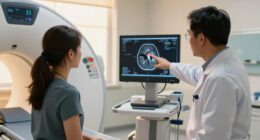
Researchers have developed a new injectable treatment that may promote brain tissue regeneration following stroke. Early studies suggest it could significantly improve recovery, but further trials are needed. The development has sparked increased interest in stroke rehabilitation advances.
A new injectable treatment designed to help the brain rebuild after stroke has shown promising results in early-stage studies, according to researchers involved in the project. This development could mark a significant advance in stroke rehabilitation, offering hope for improved recovery outcomes for millions worldwide.
The treatment involves a biologically active compound delivered via injection, aimed at stimulating neural regeneration in damaged brain tissue. In preliminary trials conducted on animal models, researchers observed notable improvements in neural connectivity and functional recovery compared to untreated controls, as reported by the study team.
While these initial findings are encouraging, experts caution that the treatment is still in the experimental phase. Human clinical trials are yet to be conducted, and it remains uncertain whether the therapy will deliver similar benefits in people. The research team emphasized that further testing is necessary to determine safety, optimal dosing, and efficacy in human subjects.
The therapy targets specific pathways involved in neural repair, including growth factors and regenerative signals, which are typically suppressed after stroke. By enhancing these pathways, scientists hope to accelerate the brain’s natural healing processes, potentially reducing long-term disability associated with stroke.
Potential Impact on Stroke Rehabilitation Strategies
If proven effective in humans, this injectable treatment could revolutionize approaches to stroke recovery by directly promoting brain tissue regeneration. Currently, stroke rehabilitation primarily focuses on physical therapy and compensatory strategies, with limited options for restoring lost neural tissue. An effective regenerative therapy could improve functional outcomes, reduce disability, and enhance quality of life for stroke survivors.
Moreover, such a treatment could decrease healthcare costs associated with long-term care and support, by enabling more patients to regain independence. It also opens new avenues for research into neural repair and regenerative medicine, possibly benefiting other neurological conditions involving tissue damage.
stroke recovery neural regeneration injection
As an affiliate, we earn on qualifying purchases.
As an affiliate, we earn on qualifying purchases.
Advances in Neural Regeneration and Stroke Treatment
Research into regenerative therapies for stroke has been ongoing for years, with various approaches including stem cell therapy and neuroprotective drugs. However, many of these have faced challenges related to safety, delivery, and efficacy. The recent focus on injectable biologics aims to overcome some of these hurdles by providing targeted, minimally invasive options.
This development comes amid increasing global attention to stroke as a leading cause of disability. According to the World Health Organization, stroke affects approximately 15 million people worldwide annually, with many surviving but facing significant long-term impairments. Innovations that can improve recovery are thus highly sought after.
While the current research is early-stage, the spike in media coverage and scientific interest underscores a growing momentum in the field of neural regeneration, driven by advances in biotechnology and a better understanding of brain plasticity.
As an affiliate, we earn on qualifying purchases.
Unconfirmed Efficacy and Human Trial Plans
It remains unclear whether the treatment will demonstrate similar benefits in humans, as studies are still in early stages and have not yet progressed to clinical trials. Safety, dosing, and long-term effects are still unknown, and regulatory approval is pending further testing.
neuroregenerative treatment for stroke
As an affiliate, we earn on qualifying purchases.
As an affiliate, we earn on qualifying purchases.
Upcoming Human Trials and Regulatory Review
Researchers plan to initiate Phase 1 clinical trials within the next year to evaluate safety and dosage in humans. Success in these trials could lead to larger studies assessing efficacy. Regulatory agencies will review trial data before approving broader use, meaning widespread availability is still several years away.
injectable treatment for brain repair
As an affiliate, we earn on qualifying purchases.
As an affiliate, we earn on qualifying purchases.
Key Questions
How does this new treatment work?
The treatment aims to stimulate neural regeneration by delivering biologically active compounds that activate growth pathways in the brain, promoting tissue repair after stroke.
Is this treatment available now?
No, it is still in early research stages. Human clinical trials are yet to begin, and regulatory approval is not expected for several years.
What are the risks or side effects?
Potential risks are unknown at this stage. Safety profiles will be assessed during upcoming clinical trials.
Could this treatment help other neurological conditions?
Potentially, yes. If proven effective, similar regenerative approaches might be explored for conditions involving neural tissue loss, such as traumatic brain injury or neurodegenerative diseases.
When might this treatment become widely available?
If clinical trials are successful and regulatory approval is granted, it could take several years before the treatment is available for general use.
Source: rss
Fall Picks
fall essentials
As an affiliate, we earn on qualifying purchases.