

TL;DR

Get health and wellness essentials delivered free with Prime
- Fast, free delivery on millions of items
- Prime Video, Amazon Music and more included
- Member-only deals all year
A Fit&Well report describes three exercises that can be done seated at a desk to address screen-related neck discomfort: a side neck stretch, chin tuck and seated chest stretch. Physical therapists quoted in the report also recommend regular movement breaks and workstation adjustments; the exercises are not presented as a guaranteed treatment.
Fit&Well has reported three exercises that can be done at a desk to address neck discomfort associated with prolonged screen use: a side neck stretch, a chin tuck and a seated chest stretch. The report, drawing on advice from physical therapists Raj Suppiah and Ashley Katzenback, also recommends movement breaks and workstation changes, while noting that the movements should be gentle and stopped if they cause pain.
The exercises are designed to be performed while seated, with feet on the floor and shoulders relaxed. For the side neck stretch, hold the chair with one hand and gently move the opposite ear toward the shoulder. The report recommends three repetitions on each side, holding each for five seconds. Katzenback, a doctor of physical therapy and owner of Cape Concierge Physical Therapy, advises moving actively into the stretch rather than pulling the head down with a hand.
For a chin tuck, sit upright and place a finger lightly at the chin as a guide. Move the head and neck backward, away from the finger, hold for about two seconds and release. The suggested range is five to 10 repetitions. The third movement, a seated chest stretch, involves extending the arms down beside the body with palms forward, then lifting the chest slightly without arching the lower back. Hold for five to 10 seconds and repeat five times.
Katzenback says the side stretch works several muscles around the neck and shoulder, while chin tucks activate deep neck flexors and move the head back from a forward position. The chest stretch aims at tightness across the front of the body. These explanations are attributed to the therapist in Fit&Well’s report; the supplied material does not provide clinical trial results or evidence that the exercises prevent or resolve every case of neck pain.
Small Movements During Screen Work
The advice is practical for people who spend long periods at a computer or looking down at a phone because it places the suggested movements in the setting where the discomfort may develop: the desk. A short routine may also serve as a prompt to change position rather than stay fixed in one posture for hours. The report frames the exercises as ways to ease or address discomfort, not as a substitute for individual assessment or a guaranteed solution.
Suppiah, a physical therapist at Foundation Physical Therapy and Wellness, describes “tech neck” as strain in neck muscles linked to prolonged looking-down posture. He says extended time hunched over phones and computers can leave muscles tight and overloaded, with stiffness, pain or headaches among possible effects. Those statements are his explanation in the report, not a diagnosis for any particular reader.
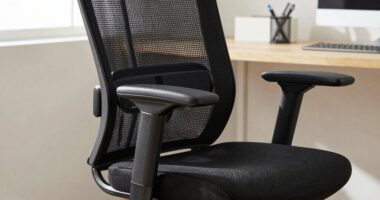
ergonomic desk chair with neck support
As an affiliate, we earn on qualifying purchases.
As an affiliate, we earn on qualifying purchases.
Posture Advice Alongside Exercises
Suppiah’s recommendations extend beyond stretching. He advises taking short movement breaks every 30 to 45 minutes, setting a screen so its top third is around eye or forehead level, and keeping the keyboard and mouse close enough to avoid repeated reaching or looking down. He also recommends regular activity, including walking, strength training and mobility work for the neck, shoulders and upper back.
The report distinguishes the three movements by their intended focus: side-to-side neck mobility, drawing the head back, and opening the front of the chest. Katzenback’s explanation is that tightness in the chest and shoulders can contribute to a forward-slouched position, while the chest stretch asks the mid-back muscles to help draw the shoulders back. This is the therapist’s rationale as presented by Fit&Well; the article material does not quantify how much any one movement changes posture or symptoms.
““strain of neck muscles as a result of a prolonged flexed [looking down] posture””
— Raj Suppiah, physical therapist at Foundation Physical Therapy and Wellness
adjustable laptop stand for ergonomic setup
As an affiliate, we earn on qualifying purchases.
As an affiliate, we earn on qualifying purchases.
Limits of the Exercise Guidance
The supplied report does not give a publication date, cite specific studies, or establish how effective the routine is across different causes or levels of neck discomfort. It also does not set out who should avoid these movements beyond advising readers to stay within a comfortable range and stop if they feel pain. Neck symptoms can have different causes, so the article’s general suggestions should not be treated as a diagnosis or individualized care plan.
It is also not clear from the source material whether the exercises have been tested as a combined routine, how often they should be repeated over a full workday, or how quickly a person might notice a change. The advice is attributed to the named physical therapists, and no independent clinical assessment of the claims is included in the material provided.
neck stretch exercise guide for desk workers
As an affiliate, we earn on qualifying purchases.
As an affiliate, we earn on qualifying purchases.
How Readers Can Apply the Advice
The report’s practical next steps are to try the movements gently, keep the suggested holds and repetitions, and pair them with breaks and a workstation setup that reduces forward reaching or looking down. Readers should stop a movement if it causes pain rather than forcing a deeper stretch. The source does not announce a follow-up study or additional reporting, so no further milestone is specified.
Anyone with persistent, worsening or concerning symptoms can seek advice from a qualified health professional, who can assess their circumstances and recommend an appropriate approach. The exercises described here are general guidance from the Fit&Well report, not medical advice.
posture correction device for office
As an affiliate, we earn on qualifying purchases.
As an affiliate, we earn on qualifying purchases.
Key Questions
Which three exercises does the report recommend?
It lists a side neck stretch, a chin tuck and a seated chest stretch. All are described as movements that can be done while seated at a desk.
How long should each movement be held?
The side neck stretch is held for five seconds per side, and the chin tuck for about two seconds. The chest stretch is held for five to 10 seconds. The report suggests three side-stretch repetitions per side, five to 10 chin tucks and five chest stretches.
Should the neck stretch be pulled with a hand?
Katzenback recommends an active side bend, using the neck muscles to move into the stretch rather than pulling the head down with a hand. The report says to move gently within a comfortable range.
Suppiah recommends movement breaks every 30 to 45 minutes, raising the screen so its top third is around eye or forehead level, keeping the keyboard and mouse close, and doing regular walking, strength and mobility activity.
Are these exercises a guaranteed treatment for neck pain?
No. The report presents them as general exercises that may help address screen-related discomfort, but the supplied material does not establish that they work for everyone or treat all causes of neck pain. Stop if a movement causes pain and consult a qualified health professional about persistent or concerning symptoms.
Source: rss
Halloween Picks
halloween
As an affiliate, we earn on qualifying purchases.