
TL;DR

Get health and wellness essentials delivered free with Prime
- Fast, free delivery on millions of items
- Prime Video, Amazon Music and more included
- Member-only deals all year
Personal trainer Pippa Sealey says shorter rest periods and unilateral exercises can add challenge to home dumbbell workouts when heavier weights are unavailable. Her sample routine combines supersets and tri-sets, but it is aimed at people already confident with basic strength exercises.
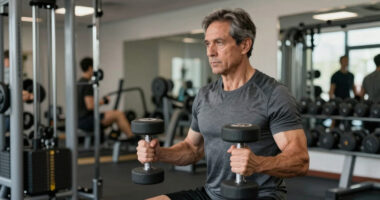
Personal trainer Pippa Sealey has shared two ways to make home dumbbell workouts more challenging without buying heavier weights: shorter rest periods and unilateral exercises that work one side of the body at a time. In a workout published by Fit&Well, she combines those methods with supersets and tri-sets for people already confident with fundamental movements such as squats and deadlifts.
Sealey says she uses shorter rests and one-sided movements when she does not have access to heavier loads at home. A superset pairs two exercises in sequence, with no rest between them; a tri-set follows the same format but includes three exercises. Rest comes after the sequence, rather than between each movement. The routine generally calls for three rounds of each group before moving on.
She also suggests agonist supersets, which pair exercises aimed at the same muscle group to increase the work placed on that area. The sample plan includes a calf raise, hamstring bridge march and wall sit; a single-leg Romanian deadlift paired with a split squat; and core exercises such as side-plank hip lifts and plank dumbbell pull-throughs. The listed sets and repetitions vary by exercise, with some movements prescribed for six to 12 repetitions per side.
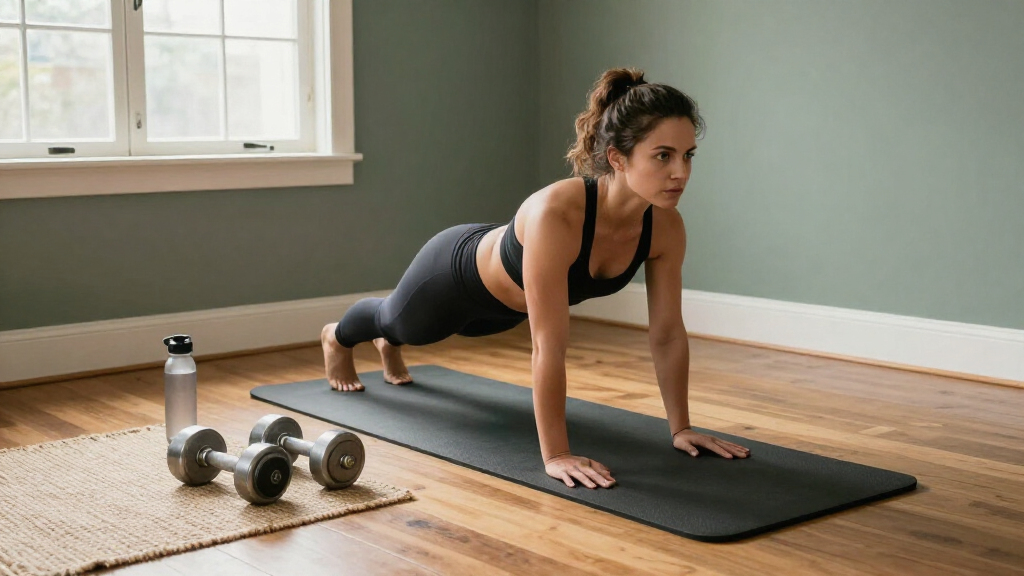
The workout also includes push-ups and a single-arm dumbbell push press. Fit&Well’s supplied routine specifies push-ups for as many repetitions as possible while maintaining good form, and gives the wall sit a 60-second hold. The listed rest after some groups is 60 to 90 seconds. The emphasis is on controlled technique as well as added effort, rather than simply completing more repetitions.
How the Methods Change the Workout
For people training with a fixed pair of dumbbells, the advice offers ways to vary a session without adding equipment. Working one side at a time can make a movement more demanding even when the load is unchanged, while shorter rests increase the density of a workout by reducing time spent recovering between exercises. Supersets and tri-sets organize those changes into repeatable sequences.
That is a practical option for home exercisers who have reached a point where repeating the same weights and routine no longer feels challenging. But Sealey’s workout is not presented as a universal starting plan: the report says it is designed for people who already know basic strength movements. It does not provide evidence that this approach produces a particular strength or fitness outcome, and individual ability, technique and recovery needs differ.
Products Worth Considering

BowFlex Results Series SelectTech 552 Adjustable Dumbbell

BowFlex Results Series SelectTech Dumbbells

Bowflex SelectTech 840 Adjustable Kettlebell
As an affiliate, we earn on qualifying purchases.
A Routine Built Around Existing Weights
Fit&Well frames the advice around a common limitation of home strength training: someone may begin with a pair of dumbbells, then find that using the same weights over time does not provide enough challenge. Sealey’s two adjustments address that constraint through exercise selection and rest structure, rather than a recommendation to purchase more equipment.
The published plan groups movements into sequences and calls for three rounds of each group. It includes both dumbbell and bodyweight exercises, so the session is not limited to lifting weights. The source material lists some exercises and instructions in detail, including the single-leg Romanian deadlift, split squat and push-up; it does not provide a complete account of every movement in the excerpt supplied here.
“You may also want to use more agonist supersets.”
— Pippa Sealey, as quoted by Fit&Well
Limits of the Published Guidance
The report does not state when the workout was published, provide a specific progression schedule, or set out how readers should adjust the plan as their fitness changes. The supplied source excerpt also ends partway through the instructions for the single-arm dumbbell push press, so it does not show the full exercise-by-exercise guidance for the entire routine.
No comparative study or measured result is cited in the material provided. The advice is attributed to Sealey as a trainer’s approach; readers should not interpret it as proof that shorter rests or unilateral exercises will produce a particular result for everyone. The source also does not discuss modifications for injuries, health conditions or beginners.
How to Apply the Training Advice
Fit&Well presents the routine as a sample session rather than announcing a new program or equipment release. Readers interested in following it can use the article’s full exercise instructions to check movement setup, repetitions and rest periods, while choosing versions suited to their current ability and maintaining controlled form. The source material supplied here does not identify a follow-up announcement or scheduled update.
For anyone new to strength training, uncertain about technique, or managing an injury or health condition, a qualified fitness or health professional can help determine whether the exercises are appropriate. Sealey’s central point remains specific: when heavier dumbbells are not available, changing rest periods and using one-sided movements are two approaches she uses to make sessions more challenging.
Key Questions
What two methods does Pippa Sealey recommend?
She recommends shorter rest periods and unilateral exercises, which work one side of the body at a time, when heavier weights are unavailable.
What is a superset in this workout?
A superset means doing one set of an exercise and then moving directly to a second exercise before resting. A tri-set uses three exercises in sequence before the rest period.
Who is the sample routine intended for?
Fit&Well describes it as a workout for people already confident performing fundamental movements such as squats and deadlifts. The supplied material does not present it as a beginner plan.
Does the advice show that the workout will produce specific results?
No measured results or study findings are cited in the source material. The methods are presented as Sealey’s training approach, not as a guaranteed outcome for every person.
Source: rss