

TL;DR

Get health and wellness essentials delivered free with Prime
- Fast, free delivery on millions of items
- Prime Video, Amazon Music and more included
- Member-only deals all year
A MedPage Today opinion report by an emergency physician examines how workload, shift timing, physician characteristics and individual practice patterns may shape emergency department care. The report describes research findings, but many are observational, and it says overcrowding and boarding have a greater effect on outcomes than the time a patient arrives.
A MedPage Today opinion report by a physician with 25 years of emergency medicine experience outlines how uncertainty, workload and individual judgment can shape decisions in emergency departments, where patients usually cannot choose their doctor. The piece reviews research on testing, admissions, shift changes and patient outcomes, while cautioning that several findings come from observational studies and do not prove that a particular doctor or arrival time causes a different outcome.
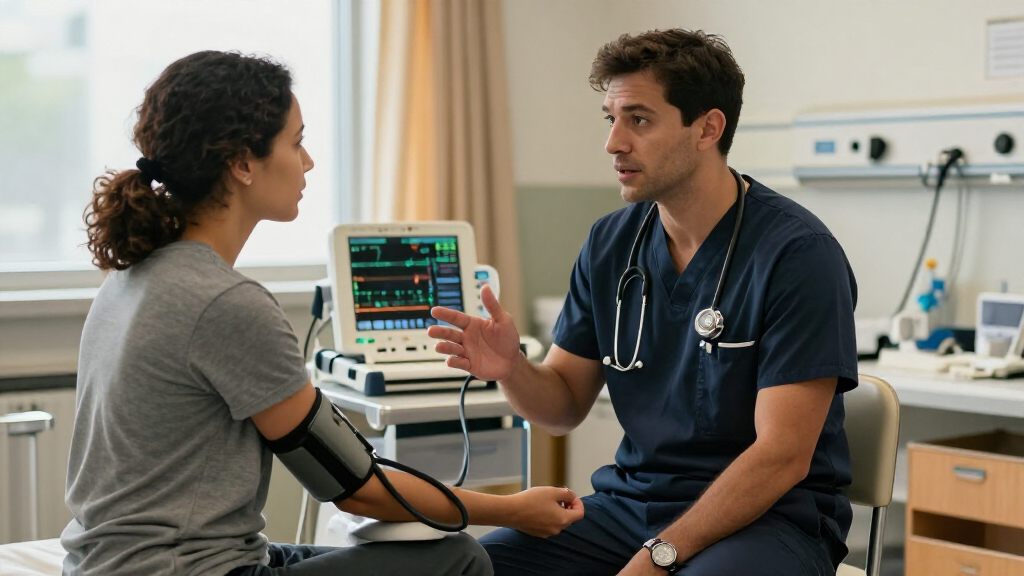
The report says U.S. emergency departments receive more than 155 million visits a year, with about one in five Americans visiting annually. It describes emergency physicians as making rapid decisions with incomplete information in a busy setting. Unlike patients seeking routine care, people arriving at an ED are generally treated by whoever is on duty.
Research discussed in the article suggests that female emergency physicians order tests and admit patients at rates about 3% to 5% higher than male colleagues, while reported patient mortality rates are no different. One study found a small association between physician age and mortality: patients treated by doctors over 60 had mortality 0.1% higher than those treated by doctors under 40. The report stresses that such observational results may reflect other, unmeasured factors rather than a direct effect of age.
The article also reviews studies linking the final hour of a shift with more hospital admissions and increasing laboratory orders as a shift progresses. It says longer shifts have not consistently been associated with worse outcomes; one 2020 intensive care study found more errors on shorter shifts, with patient volume and handoffs among possible explanations. These findings do not establish a universally safer shift length or best time for a patient to arrive.
How ED Conditions Shape Care
The report matters because emergency care is a common point of contact with the health system, and decisions made there can affect whether someone receives tests, is admitted or is discharged. Its central message is not that patients can identify a better doctor by age, gender or shift schedule, but that clinical decisions can vary even when physicians face similar symptoms.
That variation sits alongside pressures that patients may not see: crowding, incomplete records, competing emergencies and transitions between clinicians. The article says overcrowding and boarding have a greater impact on patient outcomes than the hour or day someone arrives. Understanding these limits can help patients and companions ask questions and share relevant information, without treating population-level findings as a way to predict an individual doctor’s care.
home emergency medical alert sensors
As an affiliate, we earn on qualifying purchases.
As an affiliate, we earn on qualifying purchases.
Research Behind the Report
The source is an opinion report by an emergency physician, not a new clinical trial or official practice guideline. Its author describes being treated in an emergency department and uses that experience to introduce research on how clinicians make decisions under pressure. The article discusses studies of physician demographics, shift patterns, weekend care and variation in testing and admissions.
The author also notes a drop in emergency medicine residency applicants in 2022 and that almost half of training programs went unfilled in 2023, attributing the trend likely to burnout, corporate ownership of medicine and expansion of residency positions. The report says the effect on bedside care remains unknown. It also says concerns about a “July effect,” when new residents begin training, have been mostly debunked.
“We are profoundly human, subject to the same heuristics and decision-making vulnerabilities that everyone else”
— The report’s author, an emergency physician
portable blood pressure monitor for home use
As an affiliate, we earn on qualifying purchases.
As an affiliate, we earn on qualifying purchases.
What the Studies Cannot Establish
Many of the findings summarized are associations, not proof of cause. For example, the small mortality difference reported by physician age may be due to factors the study could not account for. The supplied article does not provide the names or full methods of every study, so readers cannot assess all limitations from the summary alone.
It is also unclear how changes in residency applications will affect future care, or whether any one doctor’s testing and admission choices will improve outcomes for a particular patient. The report describes variation among clinicians but does not offer a reliable method for patients to predict or compare an individual emergency physician’s decisions.
emergency first aid kit with trauma supplies
As an affiliate, we earn on qualifying purchases.
As an affiliate, we earn on qualifying purchases.
Questions During an ED Visit
The article does not announce a policy change or a new study with a scheduled follow-up. For patients currently receiving care, the practical next step is to ask the treating team to explain the reason for a proposed test, admission or discharge plan and to share key medical history, medications and changes in symptoms. A companion can help communicate information and ask for updates, while recognizing that staff attention may be divided.
At the system level, the report points to crowding, boarding and handoffs as ongoing concerns, but it does not identify a specific intervention or timeline. Further research would be needed to clarify how staffing, workload and physician decision patterns affect outcomes and which changes reliably reduce risk.
As an affiliate, we earn on qualifying purchases.
Key Questions
Can patients choose which emergency physician treats them?
Usually not. The report says patients in an emergency department are generally treated by the physician who is on duty.
Does a physician’s gender affect emergency care?
The studies summarized in the report found that female emergency physicians ordered tests and admitted patients about 3% to 5% more often, with no difference in reported patient mortality. These are group-level findings and do not predict the care an individual patient will receive.
Is it safer to go to the emergency department earlier in a shift?
The report describes studies finding changes in testing and admission patterns near the end of shifts, but it does not establish a best arrival time. It says crowding and boarding have a greater effect on outcomes than time of presentation.
Are shorter physician shifts always safer?
No. The report cites a 2020 intensive care study that found more physician errors on shorter shifts, with patient workload and additional handoffs among possible explanations. It does not establish one shift length as safest for every emergency department.
Source: rss
Fall Picks
fall essentials
As an affiliate, we earn on qualifying purchases.