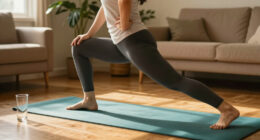

TL;DR

Get health and wellness essentials delivered free with Prime
- Fast, free delivery on millions of items
- Prime Video, Amazon Music and more included
- Member-only deals all year
Fit&Well published a personal trainer’s 10-minute, equipment-free circuit for clients over 60, with five exercises performed for 10 repetitions each and repeated for three rounds. The report recommends doing it three to four times weekly, while noting that technique, balance and individual ability affect whether the moves are suitable.
Fit&Well has published an equipment-free, 10-minute strength circuit that a personal trainer says they give clients over 60 to do at home between training sessions. The routine uses five body-weight exercises, repeated for three rounds, and includes modifications and form cautions for people who need support or a smaller range of movement.
The circuit pairs chair squats, wall push-ups and standing knee-to-elbow movements with two additional exercises in the full routine. The source instructs participants to do 10 repetitions of each move before advancing, then repeat the sequence until they have completed three circuits. It estimates that the session takes around 10 minutes with brief rests, while saying it may take longer at first.
The trainer recommends doing the routine three to four times per week. Fit&Well says it can be completed in one session or split across the day. The published guidance presents the exercises as beginner-appropriate, but warns that incorrect form may cause pain or injury and says a personal trainer can help teach technique and judge when someone is ready to progress.
For chair squats, the instructions call for standing in front of a chair, lowering until the seat is tapped, then standing again. A person who finds that difficult can sit fully before rising or hold a wall or another solid structure for support. For wall push-ups, hands press against a wall as the chest moves toward it; stepping closer makes the movement easier, while moving farther away increases the challenge.
An Accessible Home Strength Option
The routine offers a short option for strength practice at home for older adults who want to exercise between sessions with a trainer. Its use of a chair and wall, rather than weights or specialist equipment, may make the movements easier to set up in many homes. The report also describes ways to reduce difficulty, including using support, shortening the movement or taking longer rests.
Those features do not establish that the workout is suitable for every person over 60. The trainer’s own guidance stresses that technique matters and acknowledges possible pain or injury from doing the moves incorrectly. Readers should treat the routine as a general exercise plan, not an individual assessment: a person’s balance, mobility, health and comfort can affect how safely they can perform it.
Products Worth Considering

Oral-B iO Series 3 Rechargeable Electric Toothbrush for Adults, Black, with 2 Brush Heads and Travel Case

Philips Sonicare DiamondClean 9000 Electric Toothbrush Bundle, HX9912/72

Hyperice Hypervolt 3 Percussion Massage Gun with Heated Head and Premium Carry Case
As an affiliate, we earn on qualifying purchases.
How the Circuit Is Structured
The article is framed around a question the trainer says clients ask: what they can do at home between workouts. The answer is a circuit rather than a continuous timed sequence: participants complete the prescribed repetitions for one exercise, move to the next, and repeat all the exercises for three rounds. The approximately 10-minute estimate assumes brief rests and is not presented as a fixed time limit.
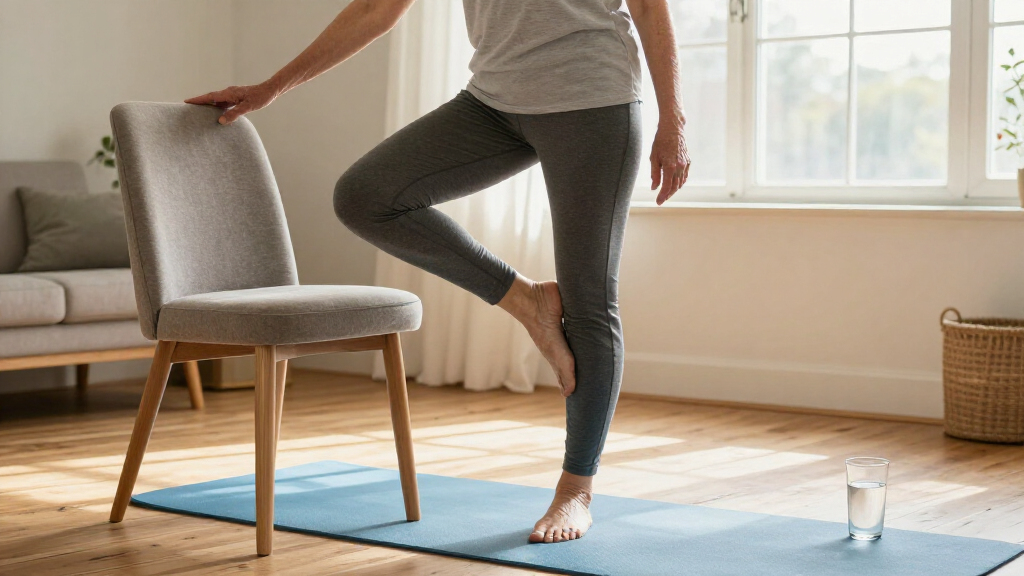
The source gives specific form cues for the three described moves. During chair squats, it advises keeping the spine from rounding or arching. During wall push-ups, the head, shoulders, hips, knees and feet should stay aligned. For the standing knee-to-elbow movement, participants alternate sides for 10 repetitions each; people with balance concerns can work one side at a time and use a wall or chair for support.
““Doing three full circuits should take around 10 minutes if you’re resting briefly between exercises.””
— Fit&Well’s report
Who Should Adapt the Exercises
The source does not identify the trainer by name or provide a study evaluating this particular circuit. It also does not give individualized guidance based on medical conditions, mobility limitations or injury history. Its label of the moves as beginner-appropriate is the trainer’s description, not evidence that every person over 60 can perform them safely.
The article does not specify how participants should respond to pain beyond warning that incorrect form can cause pain or injury. It advises working within a comfortable range for the knee-to-elbow exercise and moving slowly for people with lower-back issues. People uncertain about whether a movement is appropriate for them may want to seek guidance from a qualified health professional or trainer familiar with their circumstances.
Practice at a Comfortable Pace
The routine’s next step, according to Fit&Well, is to practice the circuit at a pace that allows brief rests and sound technique, rather than forcing it into 10 minutes immediately. The trainer suggests continuing until less rest is needed and gives a suggested frequency of three to four sessions per week. The report does not describe a formal progression plan beyond adjusting the wall-push-up distance and using support or a reduced range where needed.
Anyone following the routine should pay attention to balance and movement quality, and stop or modify a movement if it causes discomfort. The source points readers to a personal trainer for help with form and deciding when to advance; it does not say that readers need to increase the challenge or complete all three rounds if they cannot do so comfortably.
Key Questions
What does the 10-minute workout involve?
It is a five-exercise circuit, with 10 repetitions of each movement followed by two more rounds. The estimate is around 10 minutes with brief rests, but the report says it can take longer at first.
Does the routine require equipment?
The trainer describes it as equipment-free. A chair is used for the squat variation, and a wall is used for push-ups; a wall or sturdy support can also help with balance during the standing exercise.
How often does the trainer recommend doing it?
The report recommends three to four times per week. It says the workout can be done in one session or split across the day, but this is general guidance rather than an individualized exercise plan.
What if I have trouble balancing or completing a movement?
Fit&Well says people with balance concerns can do the knee-to-elbow movement one side at a time and hold a wall or chair. It also suggests sitting fully during chair squats if tapping the seat is too difficult and working within a comfortable range of motion.
Is the workout safe for everyone over 60?
The source does not establish that it is suitable for everyone. It warns that incorrect form may cause pain or injury and recommends trainer guidance on technique and progression. Individual health and mobility needs are not assessed in the article.
Source: fitandwell.com