
TL;DR

Get health and wellness essentials delivered free — and shop member deals
- Fast, free delivery on millions of items
- Access to Prime Big Deal Days deals on October 6–7
- Prime Video, Amazon Music and more included
Amanda Lim, a trainer and CEO of liftCLINIC, described a weekly routine combining strength work, cardio, walking, yoga and postpartum core rehabilitation. She says scale weight should not stand in for an assessment of health and recommends tracking measures such as lifting progress and muscle mass instead.
Trainer Amanda Lim has shared a sample week of exercise built around strength training, cardio, walking and rehabilitation, alongside advice not to treat scale weight as an assessment of health. In an interview with Fit&Well, Lim said she tracks her own progress through measures including the weights she lifts and her muscle mass.
Lim, 43, has worked as a trainer for more than 20 years and is the CEO of liftCLINIC, described in the report as a metabolic health center focused on longevity. She said her routine is deliberately straightforward: a balance of functional strength training, zone two cardio and steps. The schedule she shared is an example of her own week, not a prescribed program for everyone.
Her week starts with a leg-focused strength session on Monday and an upper-body-focused session on Tuesday. Wednesday is set aside for postpartum core rehabilitation, followed by walking for active recovery on Thursday. Friday includes running intervals in the morning and yoga in the evening; Saturday is a power-focused workout, and Sunday a zone two run.
Lim said she continues to include pelvic floor and deep-core work after the birth of her youngest child, who was two and a half when the report was published. She told Fit&Well that postpartum rehabilitation can be treated as part of long-term fitness rather than something relevant only immediately after childbirth. She also connected those concerns with her own experience approaching perimenopause.
Progress Beyond Scale Weight
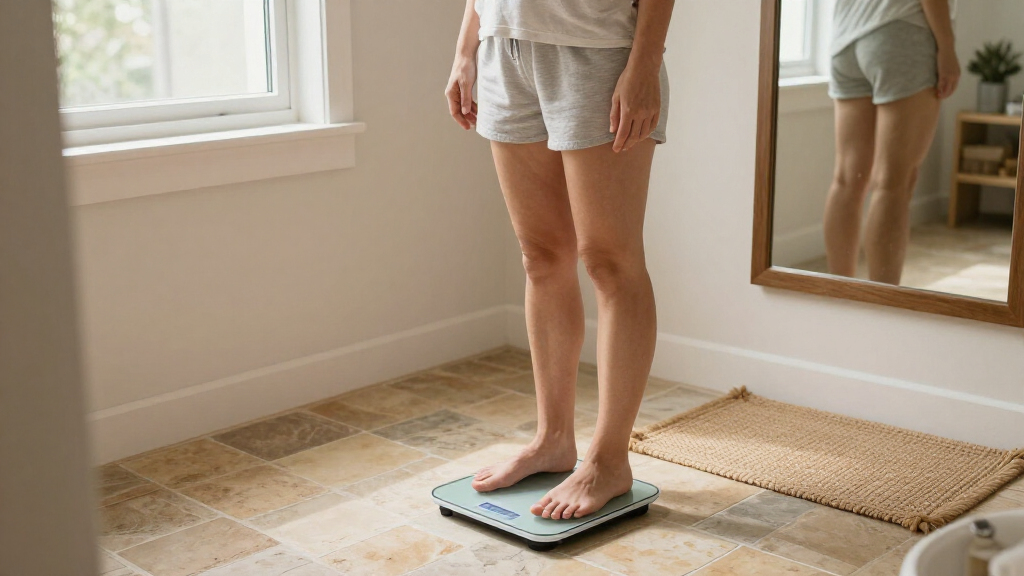
Lim’s advice draws attention to the difference between body weight and broader measures of health. She said the two do not “typically track beautifully together,” and suggested people choose progress measures that reflect their own goals, such as strength gains or changes in muscle mass. The report presents this as her perspective, not as a clinical assessment or a universal rule for measuring health.
Her routine also illustrates how she combines different kinds of movement across a week, rather than relying on one type of exercise. Strength work, aerobic activity, walking, mobility-oriented practice and rehabilitation each have a place in the schedule she shared. For readers, the practical point is that her example is varied, while the report does not establish that this particular timing or volume is necessary for others.
Lim’s beginner advice emphasizes small, repeatable steps. She recommends starting with a five-minute walk for people who do not currently exercise and says it can be easier to build consistency from a manageable starting point. She also encourages self-compassion when someone falls short of personal goals, framing it as a way to continue during difficult periods rather than abandon a routine.
As an affiliate, we earn on qualifying purchases.
A Routine Built Around Longevity
The Fit&Well report presents Lim’s schedule as an example of exercise she follows, together with five tips for people seeking greater consistency. Along with separating health assessment from scale readings, her recommendations are to welcome the beginner stage, learn a new physical skill, start walking and practice self-compassion.
Lim said beginners can make substantial early gains in muscle development compared with trained athletes, though the article does not provide study details or quantify those gains. Her skill examples include learning a cartwheel or working toward a handstand. She also referred to six lifestyle-medicine pillars: nutrition, sleep, physical activity, stress management, social connection and minimizing exposure to harmful substances. She described self-compassion as a seventh pillar in her own framing.
The workout timetable is personal: it includes seven days with some form of activity, including recovery walking and yoga as well as more demanding sessions. The source does not say that Lim expects everyone to follow the same schedule, nor does it provide individualized guidance for readers with health conditions, injuries or different fitness levels.
“We have to separate the number on the scale—the weight of our bodies—from the assessment of our health, because those two things don’t typically track beautifully together.”
— Amanda Lim, as quoted by Fit&Well
As an affiliate, we earn on qualifying purchases.
Limits of the Personal Example
The report describes Lim’s own routine and recommendations; it does not establish that her schedule is suitable for every reader or compare it with other training plans. It also does not provide details about how her exercise volume was determined, or give clinical evidence for the specific claims about beginner muscle gains and scale weight.
Lim’s comments about postpartum rehabilitation and perimenopause reflect her account and experience. The article does not give individual medical guidance or explain how a person should adapt exercise after pregnancy, during recovery or when managing a health condition. Readers’ needs can differ, and the source does not specify modifications to the listed workouts.
The phrase “seventh pillar” is Lim’s characterization. The six other pillars are listed in the report, but no organization or clinical guideline is cited there as formally recognizing a seventh. The publication date is also not stated in the supplied source material.
postpartum core rehabilitation exercises
As an affiliate, we earn on qualifying purchases.
As an affiliate, we earn on qualifying purchases.
Applying the Advice Safely
The report offers no announced follow-up or new program. Lim’s immediate recommendations are to choose a manageable starting point, build consistency gradually and track progress using measures that align with personal goals rather than relying on scale weight alone.
Her timetable can serve as an example, but it is not presented as a universal prescription. Anyone considering changes to exercise during postpartum recovery, while managing an injury or with a health condition may need guidance suited to their circumstances. The source does not provide details of a formal plan or further milestones from Lim or liftCLINIC.
As an affiliate, we earn on qualifying purchases.
Key Questions
What does Amanda Lim’s weekly workout routine include?
Her example week includes two strength sessions, postpartum core rehabilitation, recovery walking, running intervals, yoga, a power-focused workout and a zone two run. Lim presents it as her own schedule, not a plan every reader should copy.
Why does Lim say not to judge health by scale weight alone?
Lim said body weight and health do not necessarily move together. She tracks her own progress through lifting performance and muscle mass, but the report does not offer a clinical assessment method for readers.
What does she recommend to someone who is new to exercise?
Lim recommends starting with a five-minute walk and building from a manageable first step. She also encourages beginners to recognize that starting a new activity can bring early progress.
Does Lim’s schedule apply to everyone?
No. It is a description of Lim’s personal routine, and the report does not call it a universal prescription or provide modifications for different health and fitness needs.
Source: rss
Fall Picks
fall essentials
As an affiliate, we earn on qualifying purchases.